
iOS Custom Precision Drill: Build Repeatable Shot Groups
Precision is not a byproduct of speed or scoring. It is the foundation everything else depends on.
The Custom Precision Drill is for you if you want to measure and develop that foundation on your own terms. It answers one clear question:
How tight and repeatable are your shot groups when nothing else is influencing the result?
Practice on Your Own Terms
Custom Precision allows you to train with any LASERHIT target or your own custom target, as long as detection and scaling requirements are met.
You define:
• the target
• the indoor distance
• the measurement units
• the group size goal
• the number of shots per stage
• the time allowed
LaserHIT handles the measurement, progress tracking, and data integrity.
It does not tell you how to train. It measures what you actually do.
Objective and Goal
The objective is straightforward. Execute a defined number of dry-fire shots and evaluate the size of the group they create.
Range, shot count, and time limits are fully defined by you.
The goal is simple and uncompromising:
Build tight, consistent shot groups according to the standard you set.
There is no bonus for speed. No compensation for averages. Precision is measured directly through group size.
What You Need
To run the Custom Precision Drill, you need:
• any LASERHIT target or your own custom target
• a LASERHIT Reload Mark
• a LASERHIT Training Kit or compatible laser device
• a smartphone mounted on a stable tripod
If you use a custom target, it must have a solid dark surface for reliable detection. White or light-background targets are not accepted.
The LASERHIT Reload Mark is required and can be downloaded free from the LaserHIT website.
Target scale must be set correctly during Firing Range Setup before starting the drill.
As always, follow all standard dry-fire safety rules.
How the Drill Works
Custom Precision always on the top of the list, cannot be deleted, and accessible even without PRO Access.
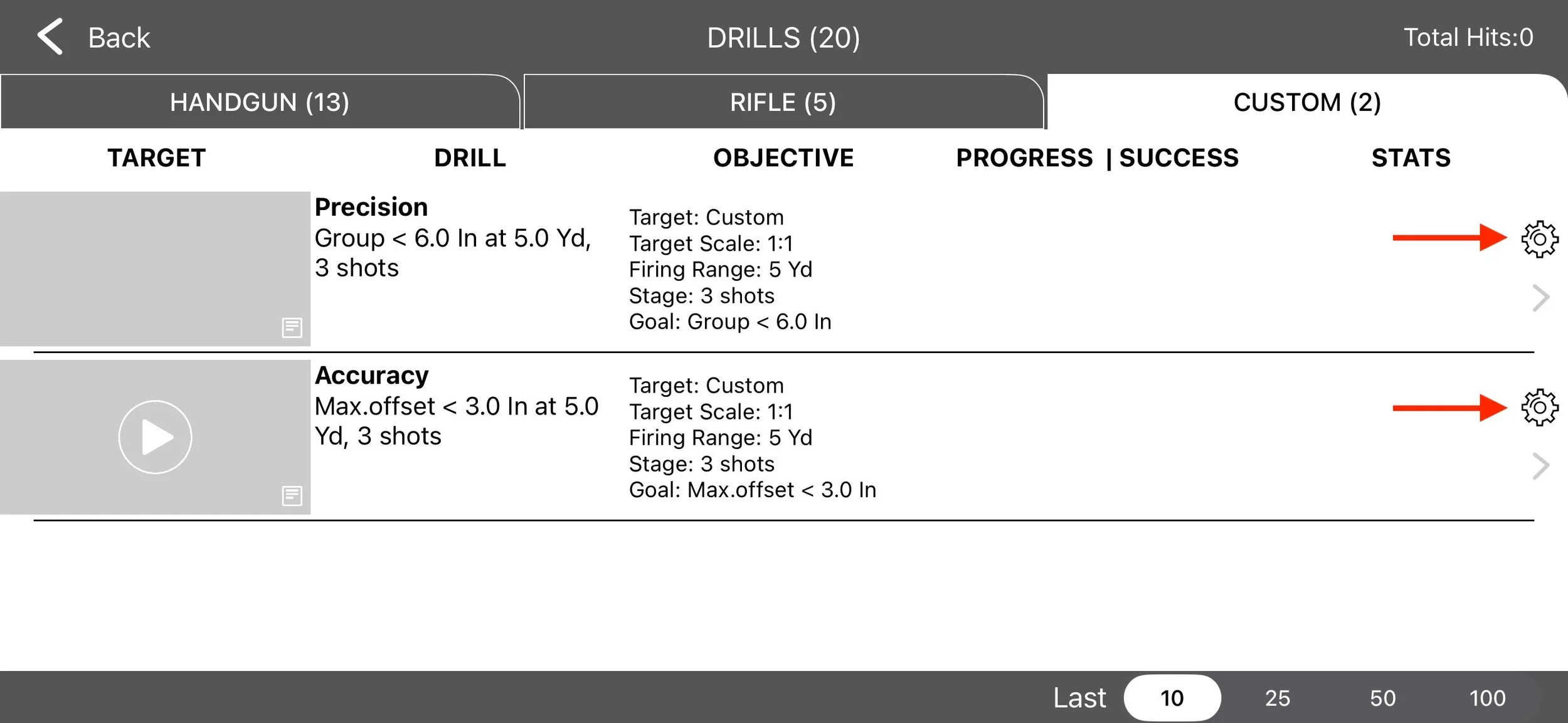
Here is the important part.
Do not start the drill immediately.
Come to Custom Drills with your settings already in mind. Tap the Settings icon inside the drill panel first and define your configuration before completing the first stage.
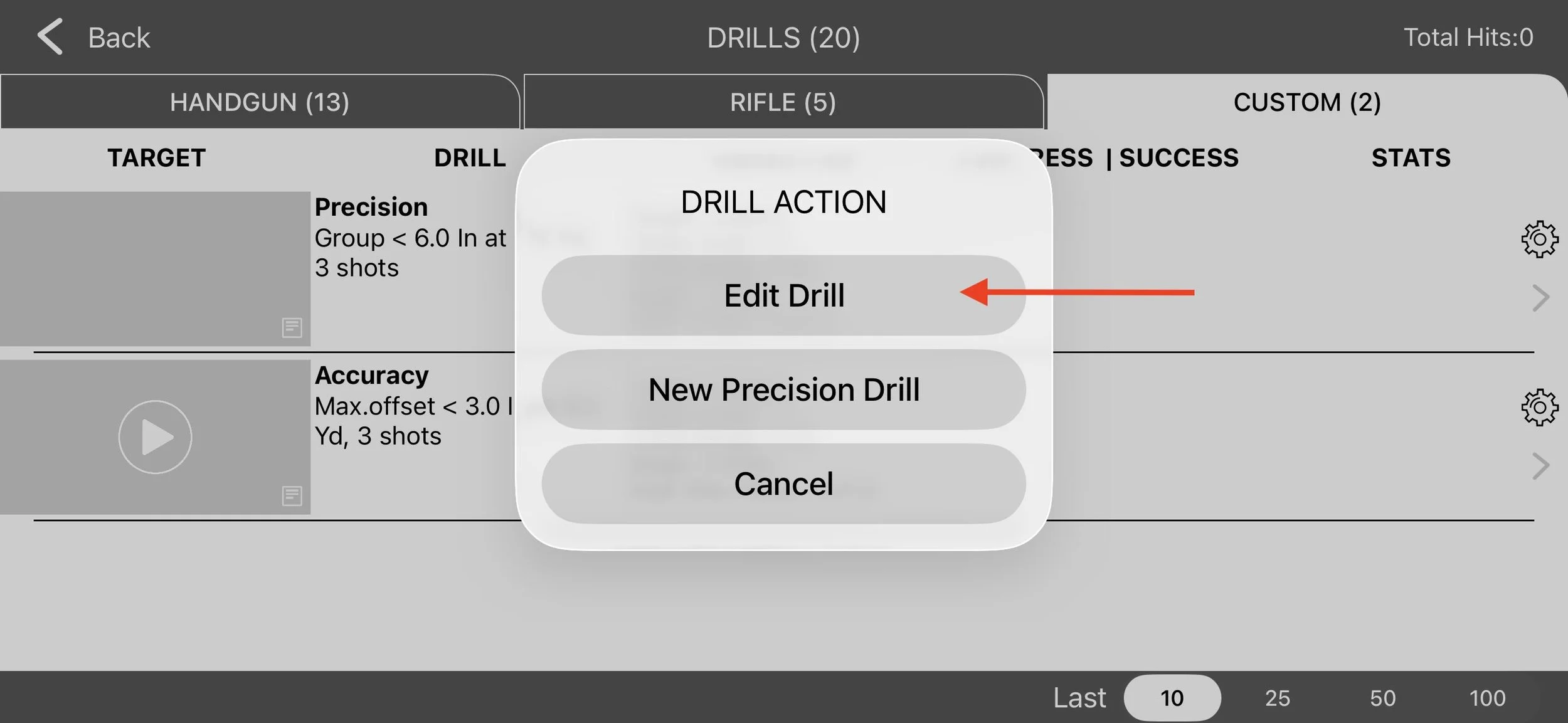
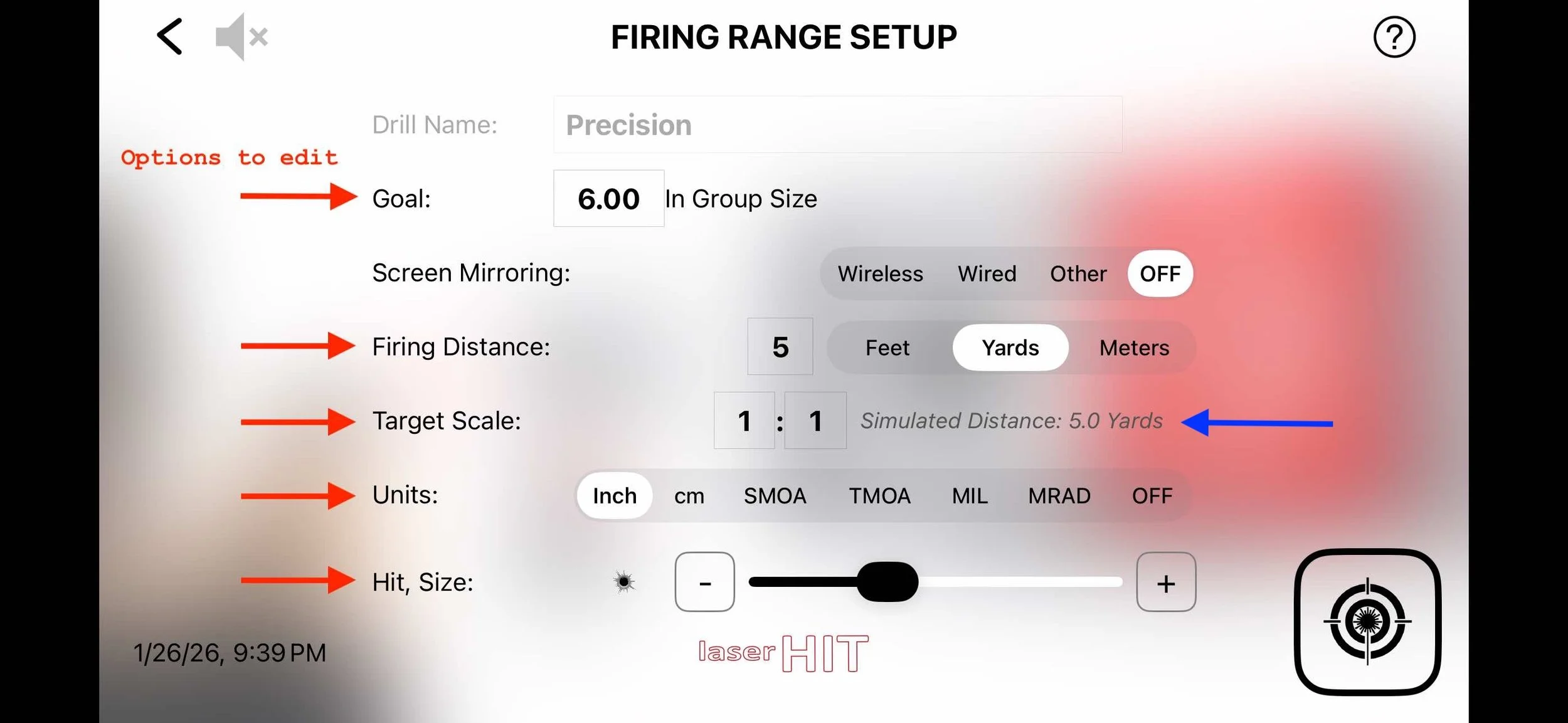
Set:
• group size goal
• indoor firing distance
• target scale
• measurement units in inches, centimeters, MOA, or MIL
• hit hole size
• shots per stage
• stage timeout from 10 seconds to 5 minutes
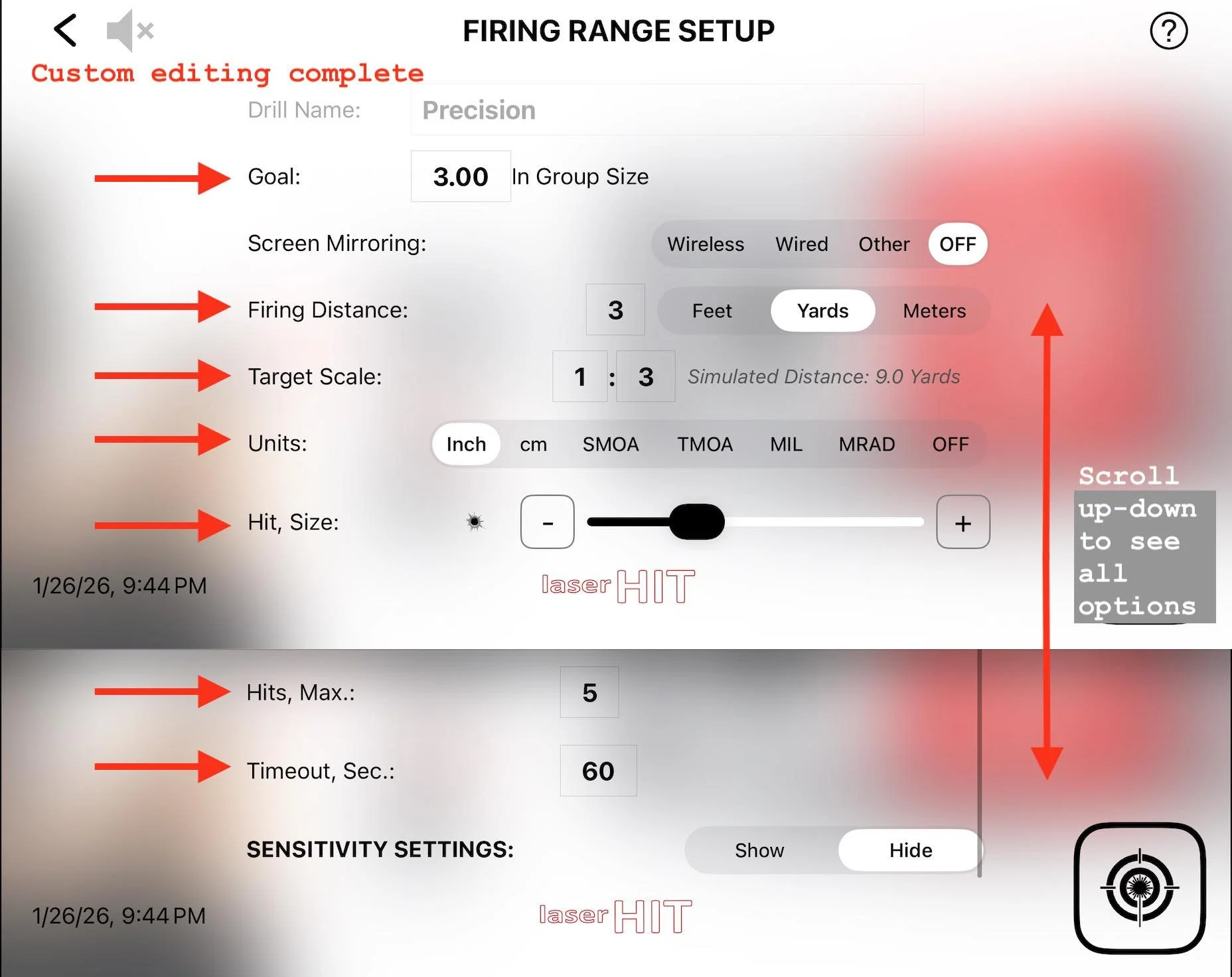
Once you complete the first stage, the configuration locks.
At that moment, the target image used for the drill is captured and saved on the Custom Drills screen. This gives you a visual reference of exactly which target was paired with which setup.
From that point forward, only the goal value can be adjusted. Distance, scale, units, shot count, and timeout remain fixed.
If you need to change any of those parameters, you must Reset the drill. Resetting permanently deletes all recorded statistics.
This behavior is intentional.
Stats only has meaning when conditions remain stable. Changing variables mid-progress would invalidate comparison and make the data unreliable.
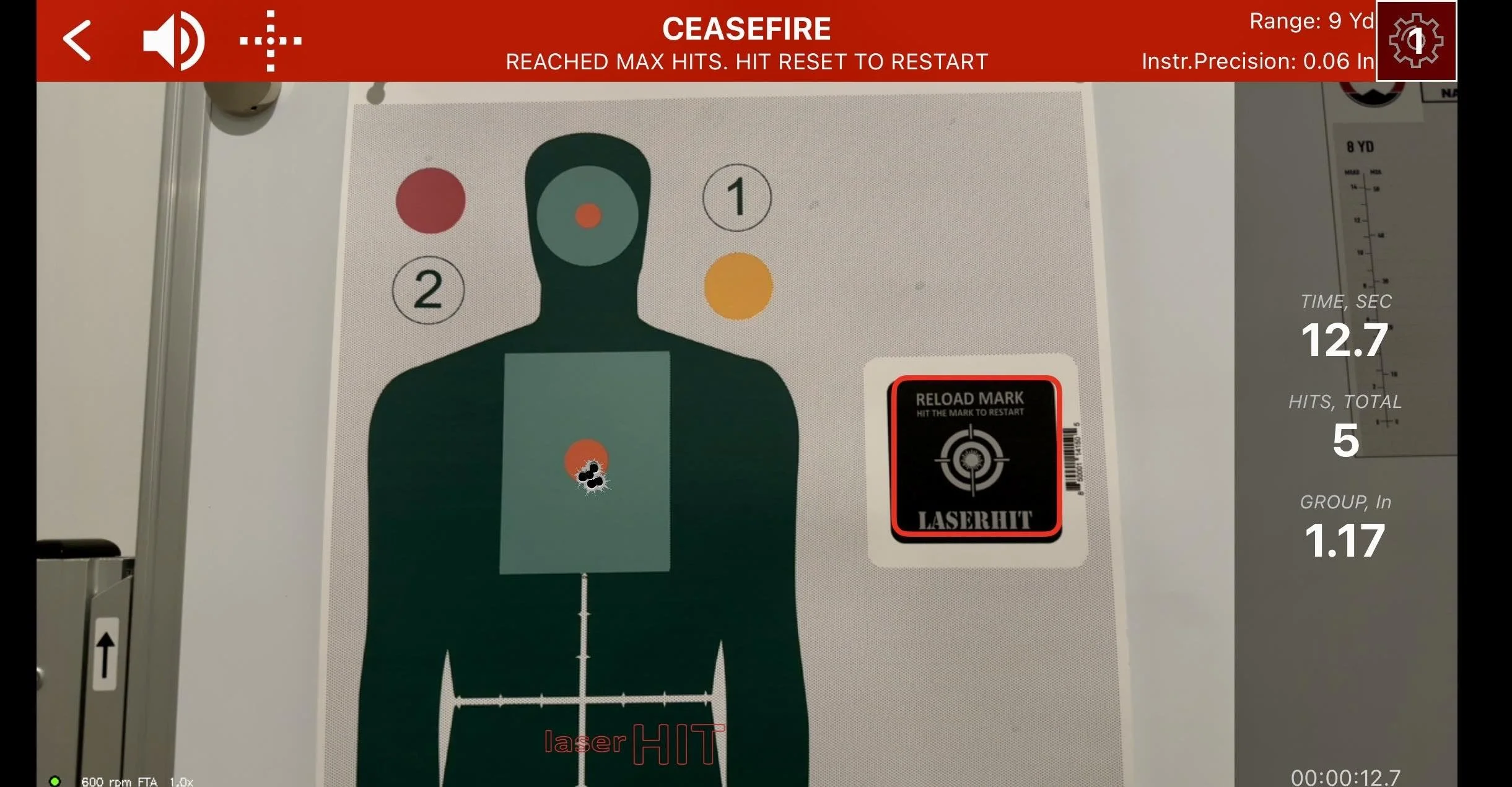
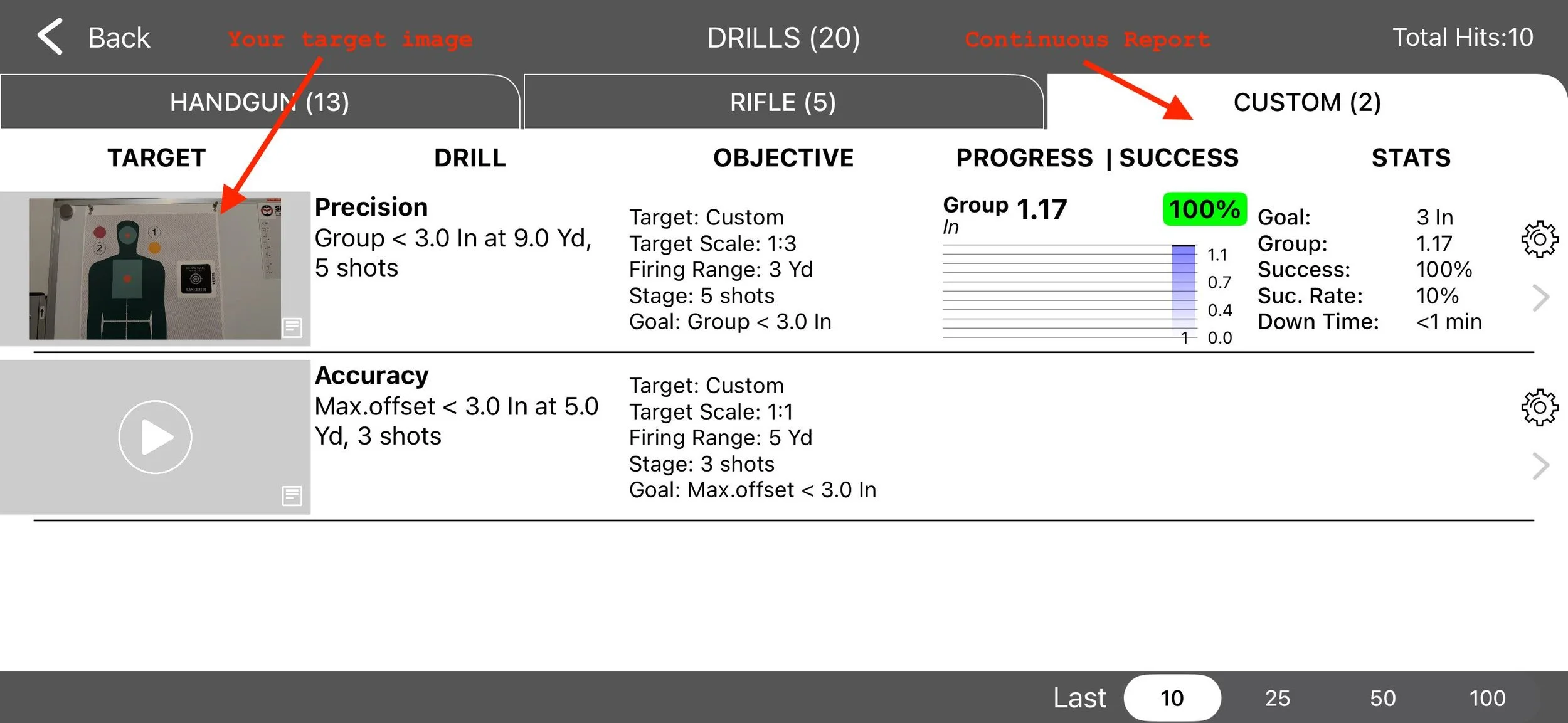
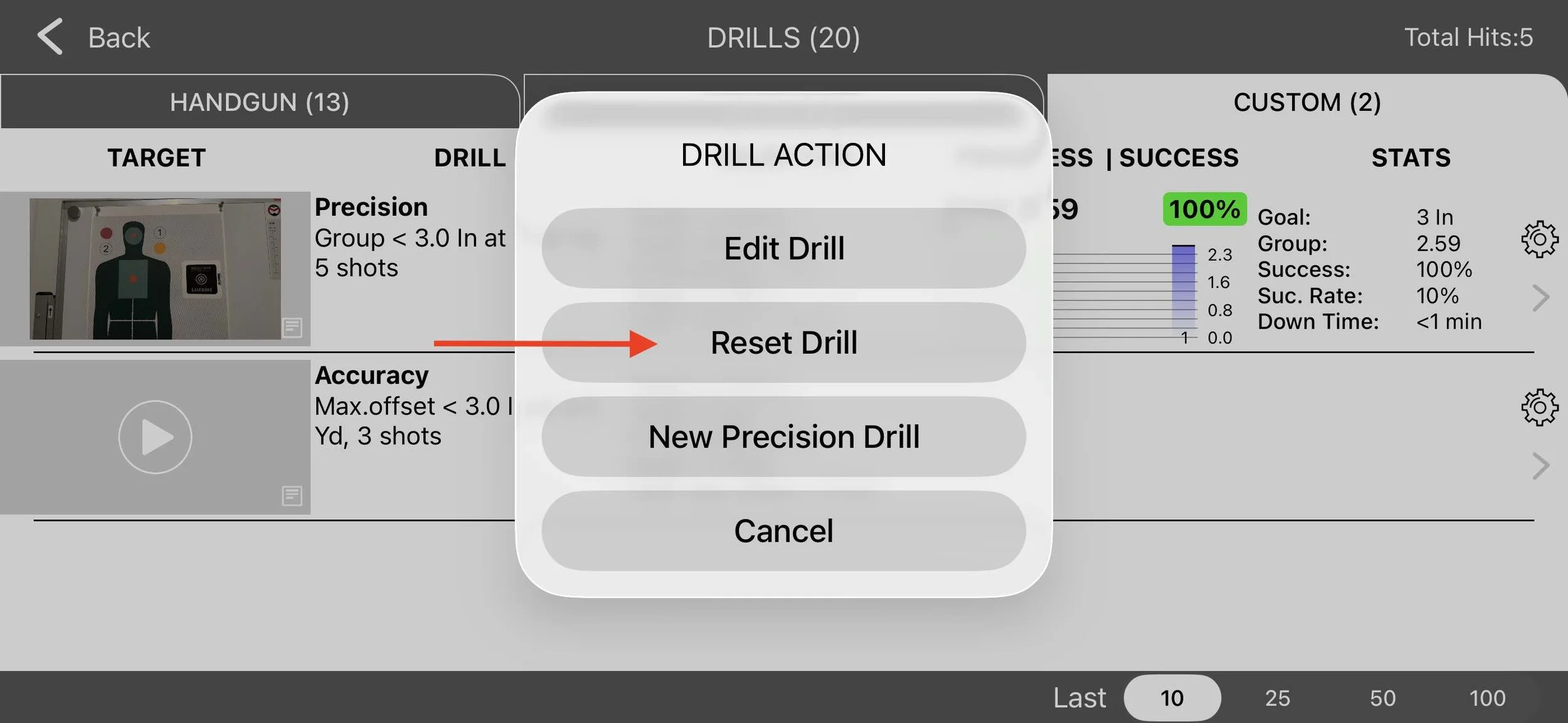
With PRO Access, you can create additional Custom Precision drills as independent copies of the default drill. Each can be renamed, edited, or deleted, allowing you to maintain multiple precision standards without overwriting prior results.
Performance Tracking Without Interpretation
Every completed stage becomes part of a continuous progress record.
LaserHIT displays group size in the real-world units you selected, referenced to a true 1:1 scale target.
Over time, you see:
• the most recent group size
• change from the previous stage
• whether your goal was met
• overall success rate
• improvement or regression trends
• time since your last completed session
Nothing is averaged away. Nothing is smoothed.
You see exactly what happened under consistent conditions.
If PRO Access expires, your recorded statistics remain stored on your device. Full tracking resumes once PRO is renewed.
Before You Go
Custom Precision is not designed to impress.
It is designed to expose your baseline.
It gives you a way to build and confirm group consistency before adding point-of-aim correction or time pressure.
When your precision is repeatable, everything else becomes measurable.