
ACCURACY DRILLS (iOS): Turning Accuracy Into Measurable Truth
Accuracy is often misunderstood. Many shooters believe accuracy means tight groups. Others believe it means speed with acceptable hits. In reality, accuracy is more demanding: placing shots exactly where intended, repeatedly, and understanding why they land where they do.
LaserHIT Accuracy DRILLS are designed to measure that difference using LaserHIT B3-type targets as the reference standard for scaling, measurement, and repeatability.
In the current DRILLS lineup, four Accuracy drills address this goal from different angles: Practical Accuracy and Ultimate Accuracy for both handguns and rifles. All measure accuracy, but not in the same way.
Accuracy as a Category: What These Drills Have in Common
All Accuracy DRILLS are built around a single principle: accuracy is defined by how closely shots land to the intended point of aim, not by how tightly they group.
These drills evaluate shot placement relative to a fixed reference point rather than relative to other shots. Results are measured in real-world units, in inches, using offset as the core metric. Offset represents the true distance between intent and execution, without averaging, smoothing, or interpretation.
Across all Accuracy DRILLS, the system prioritizes:
• shot placement over speed
• consistency over averages
• accountability over comfort
What separates individual drills is not what they measure, but how strictly that accountability is enforced.
Look Inside the Accuracy Drills
Accuracy drills are deliberately transparent about how results are measured and why setup matters.
You may use default LaserHIT targets or your own target on the wall. When using a custom target, several requirements apply. Targets must use solid colors. White or reflective targets are not accepted. Target scale must be known. If the physical size is incorrect or unknown, measured offsets will not represent true accuracy.
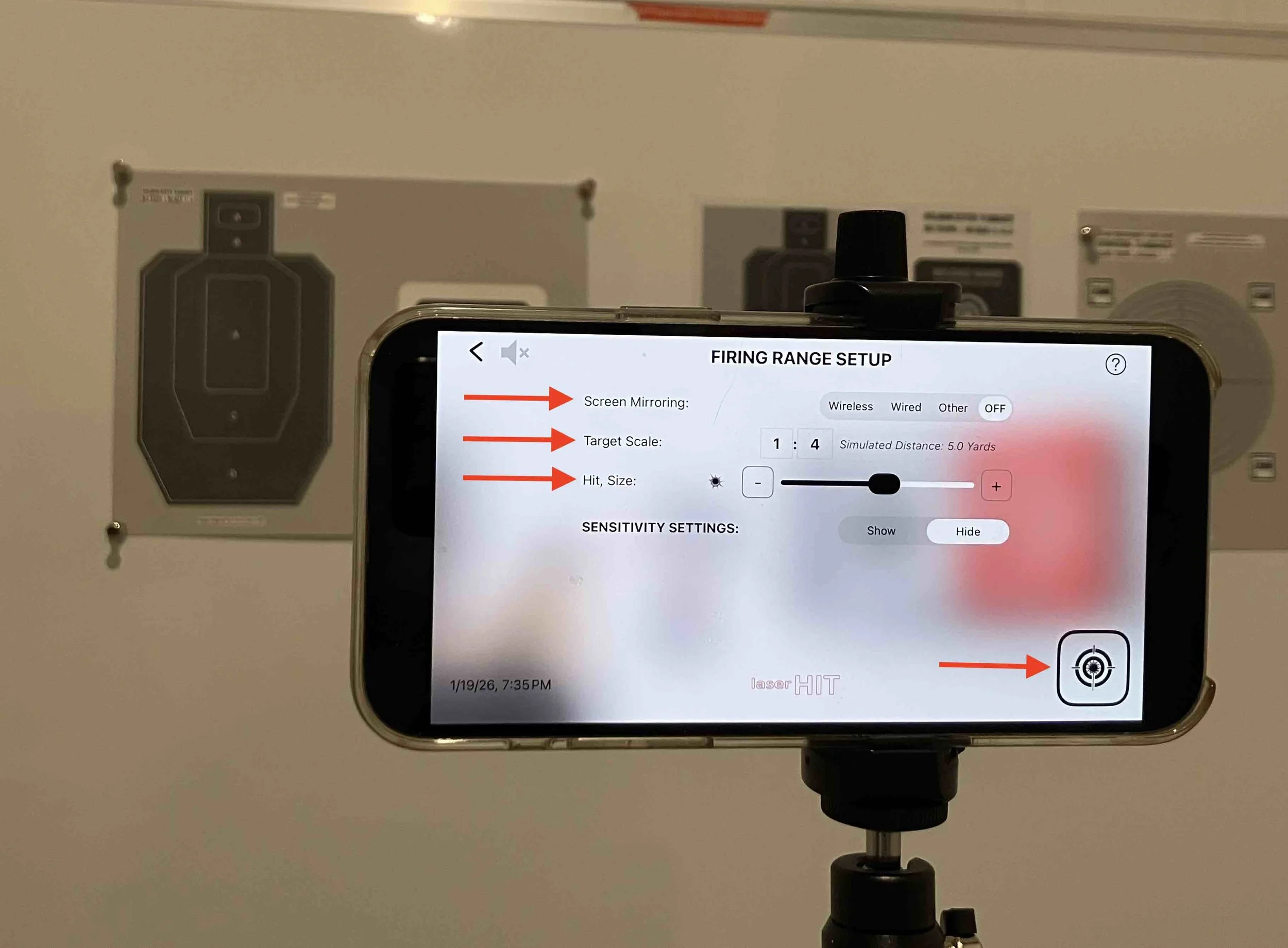
Each Accuracy drill measures maximum offset from a defined point of aim. That reference point is set manually during Express Setup. You pan the crosshair over the target to specify the exact point of aim. While positioning, the crosshair appears white.
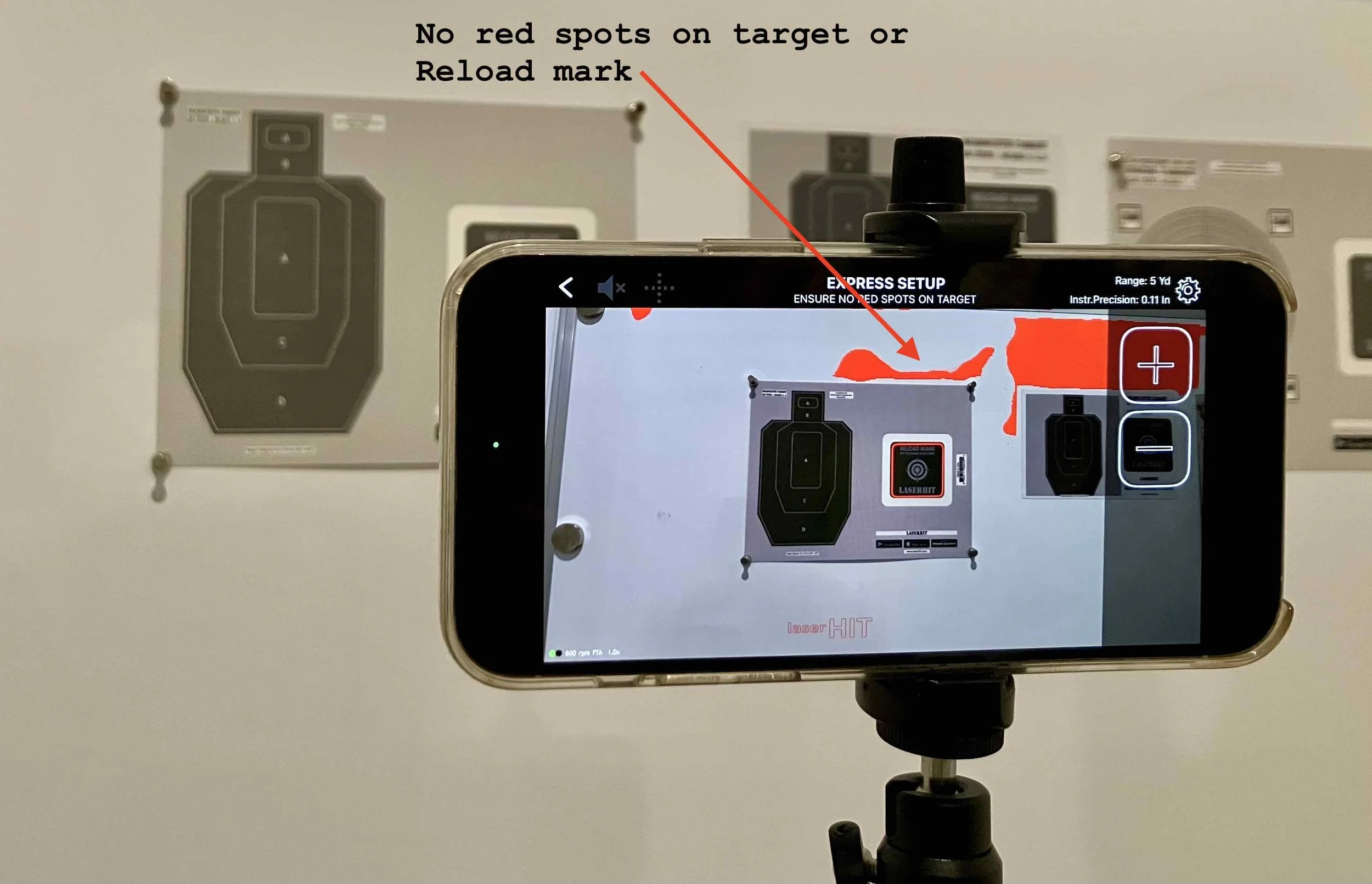
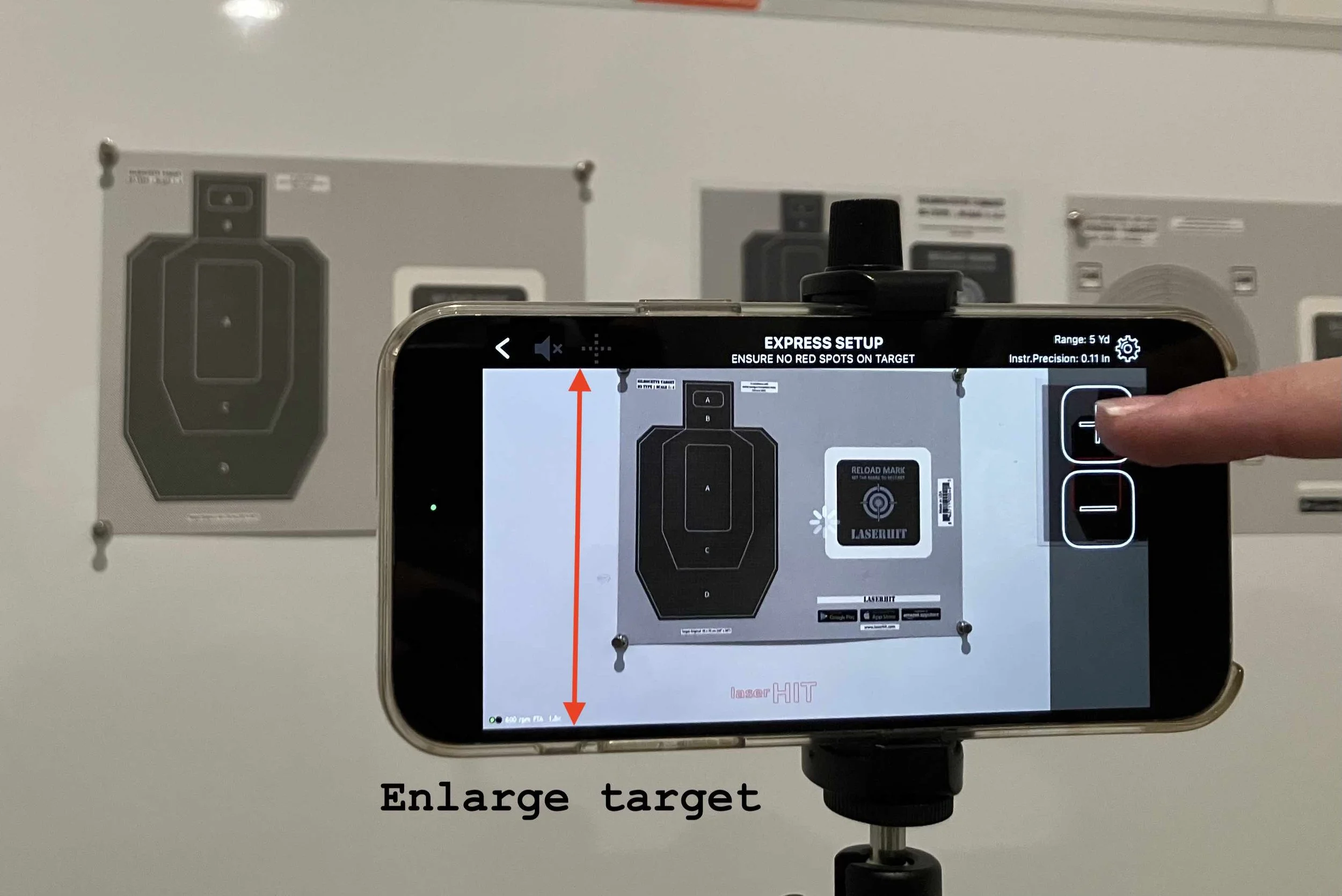
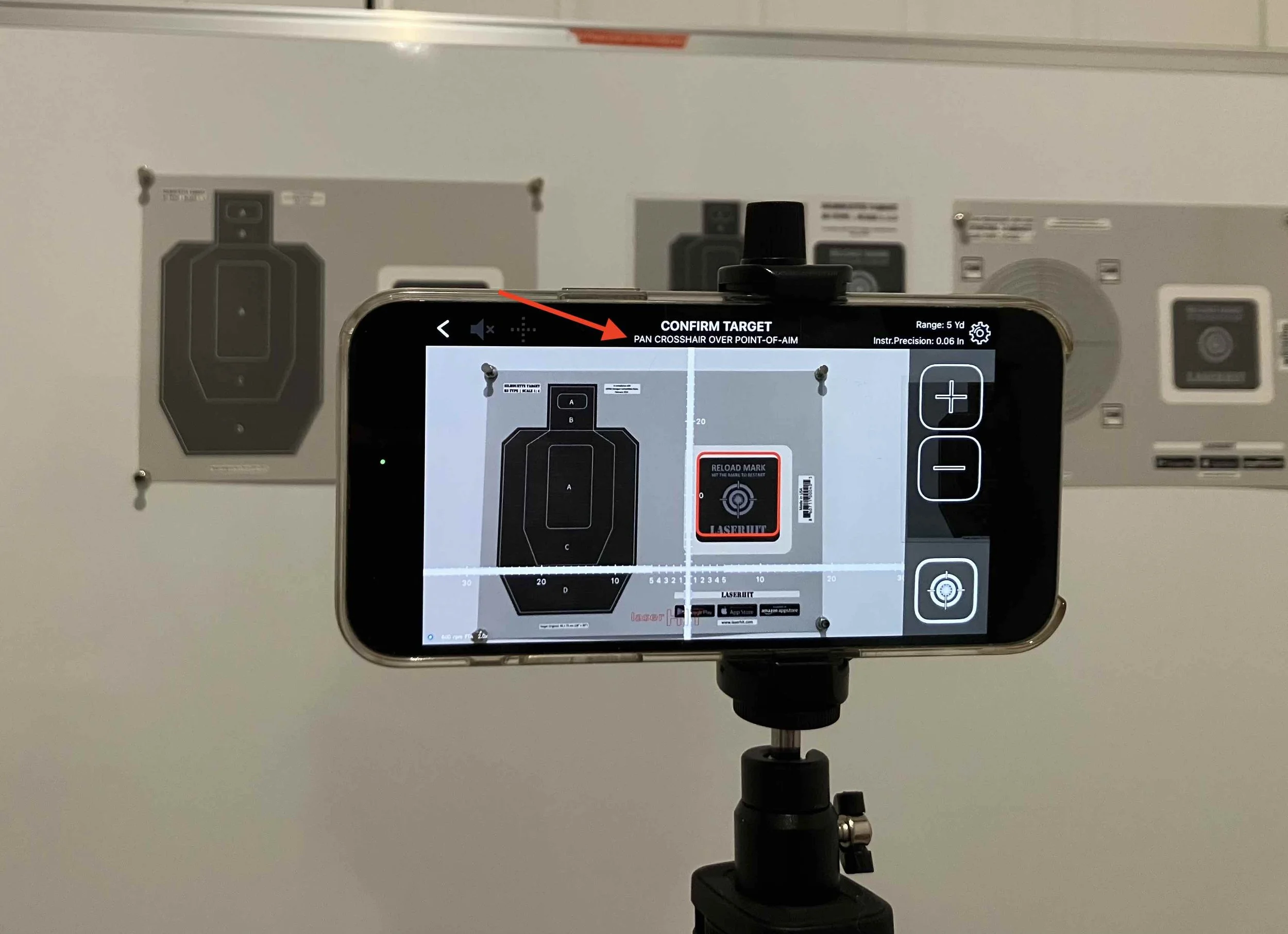
Once the app completes fine alignment and confirms the reference, the crosshair turns red, indicating the system is locked and ready.
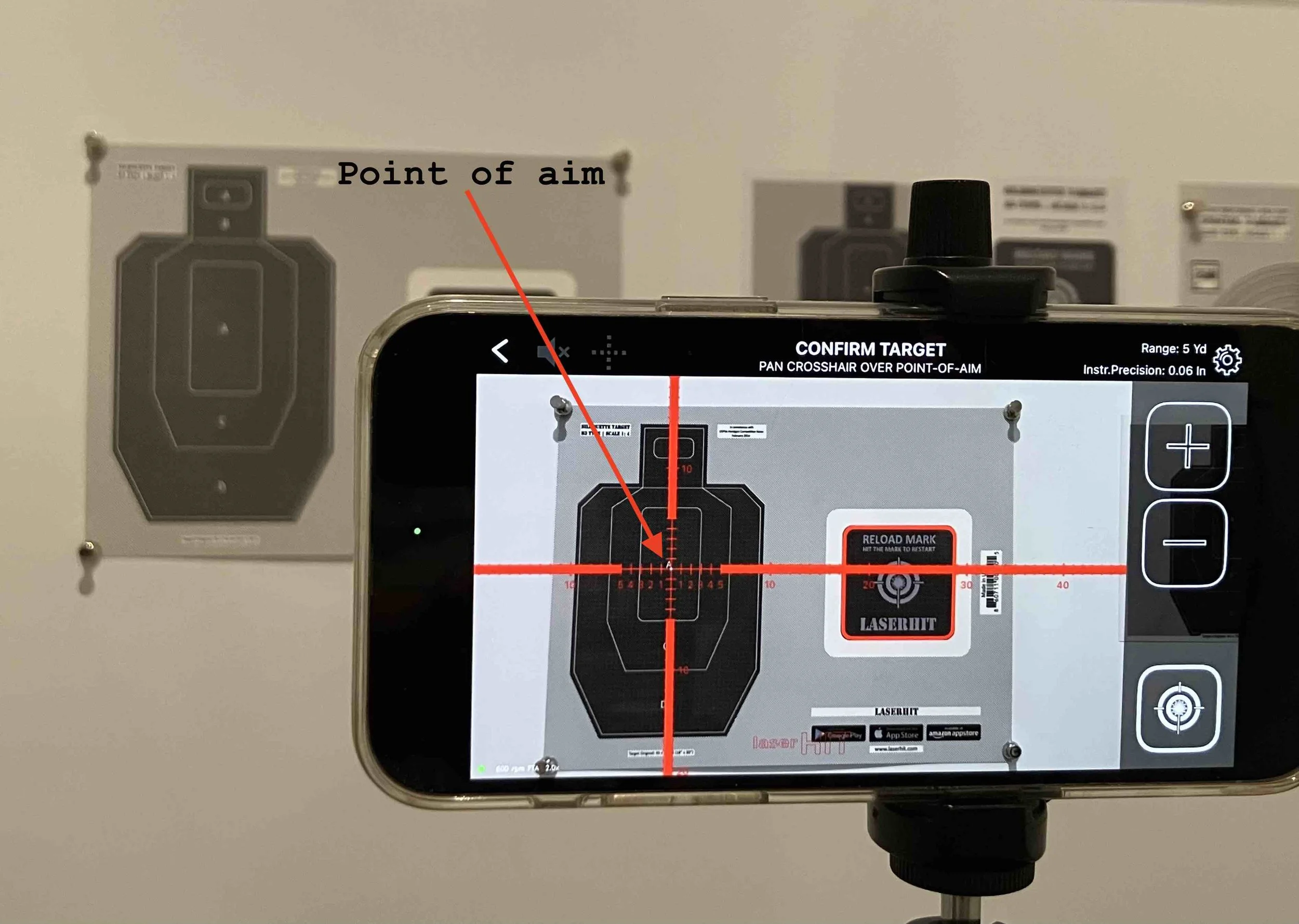
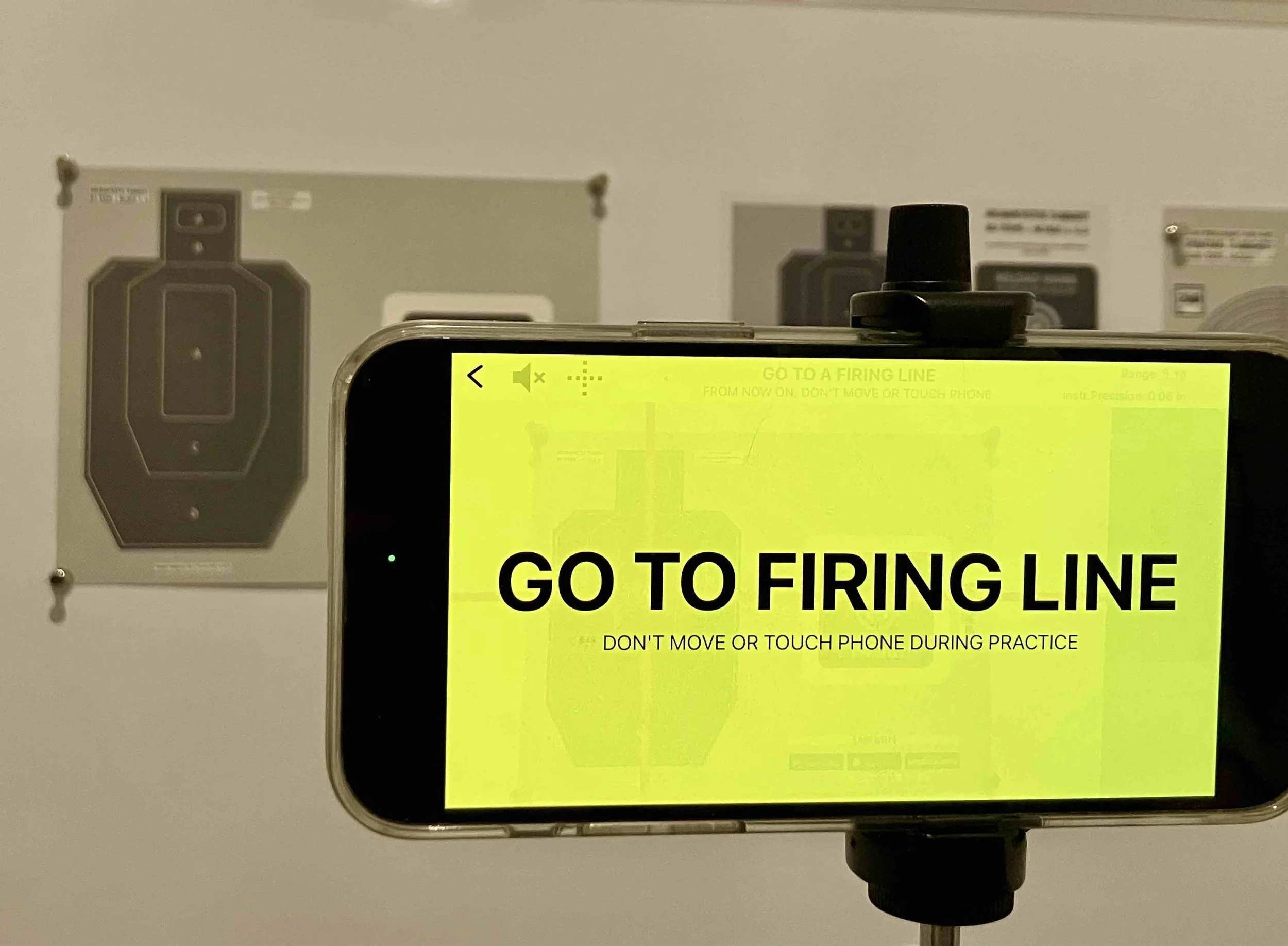
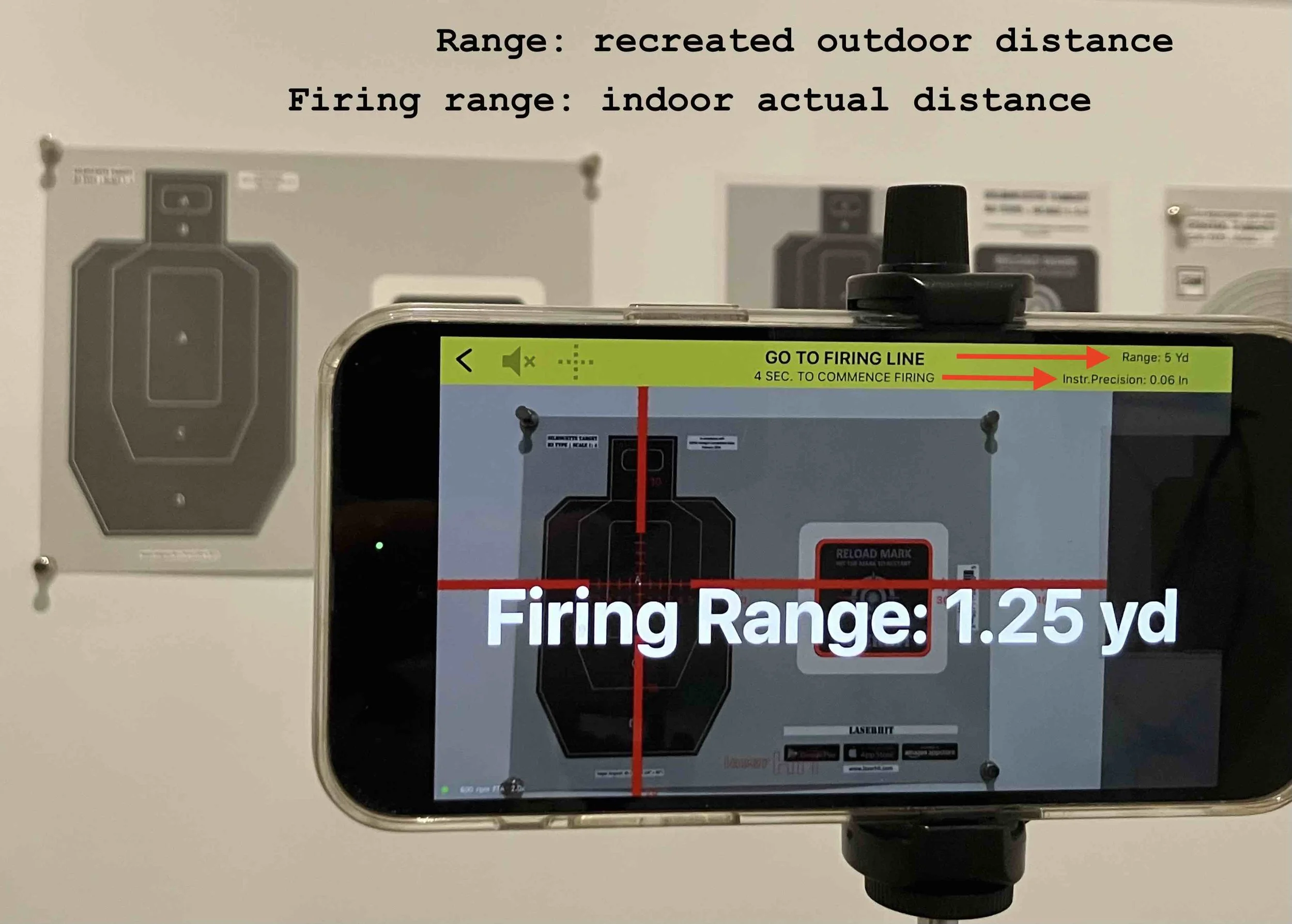
From that moment on, every shot is evaluated strictly against that fixed reference point. Results are not influenced by grouping, averages, or recovery between shots. Accuracy drills are designed to expose aiming error and bias directly, not to reward clustering alone.
Practical Accuracy vs Ultimate Accuracy: Same Objective, Different Demands
Practical Accuracy: Correcting Bias and Understanding Error
Practical Accuracy is designed to reveal what grouping alone cannot.
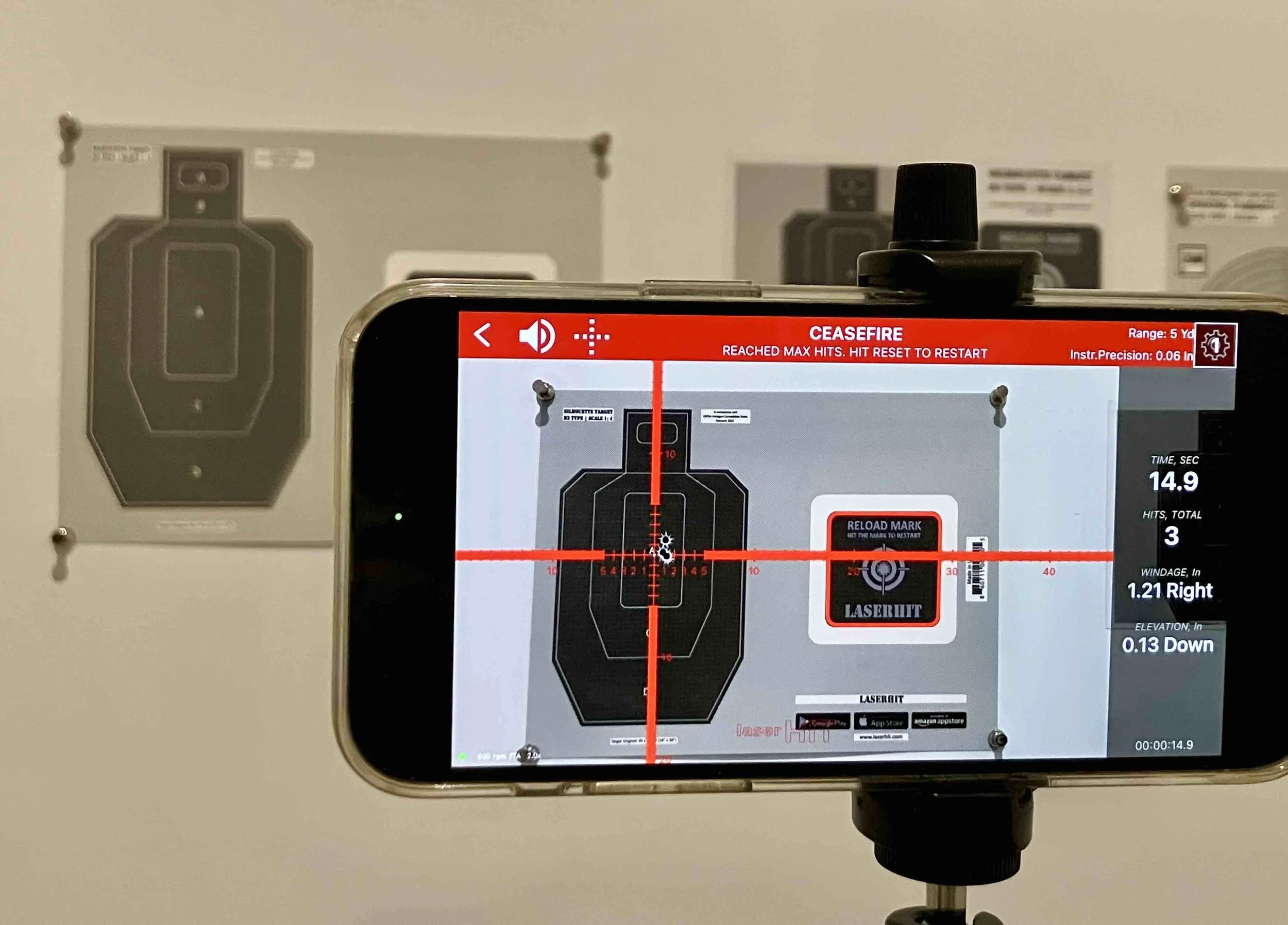
Instead of measuring how tightly shots cluster, this drill evaluates each shot relative to the exact aim point. A tight group that is consistently left, right, high, or low will fail. The system displays windage and elevation for every shot and, at the end of the stage, calculates a maximum offset.
This drill is inspired by benchrest-style accuracy training, where the goal is not speed or scoring, but diagnosis. It teaches you to identify zero error, aiming bias, and subtle inconsistencies in grip, trigger press, or sight alignment.
Ultimate Accuracy: Sustained Control Without Recovery
Ultimate Accuracy represents the highest level of accuracy inside the DRILLS system.
Here, the challenge shifts from correction to endurance. Every shot matters equally, but the result is defined by the worst shot, not the average. One deviation determines the outcome.
This drill requires ten consecutive shots to remain within a half-inch accuracy. There is no opportunity to recover from a mistake and no tolerance for drift.
If that goal sounds unrealistic, consider what it represents in practical terms. A half-inch offset means keeping all ten shots inside a circle roughly the size of a twenty-five-cent coin. It is difficult, but it is not theoretical. Most experienced shooters know someone who can do it, and many have achieved it themselves under the right conditions.
At this level, equipment characteristics also matter. Ultimate Accuracy pushes the limits of what can be measured consistently at very small offsets. LaserHIT HD laser cartridges are engineered with tighter beam geometry and stability to support extreme precision and accuracy drills. Other laser devices may still provide valuable training, but achieving one hundred percent success at this standard may not be technically possible without hardware designed for that level of measurement.
What You Need to Start with Accuracy DRILLS
All Accuracy DRILLS use the same core setup:
• a LaserHIT Training Kit or compatible laser device
• a printed LaserHIT target (B3 or 25M, depending on the drill)*
• a stable phone mount or tripod
Training distance is calculated automatically based on target scale. For best results, Laser Zeroing is recommended to ensure point-of-aim alignment matches the firearm and setup you are using.
*Custom targets are supported.
Laser Zeroing: Aligning Point of Aim and Measurement
Laser Zeroing ensures that measured results match your true point of aim. Because Accuracy DRILLS evaluate shots against a fixed reference point, proper zeroing is essential for meaningful data.
The best moment to zero is immediately after completing a stage, either at Ceasefire or during stage review. At that point, the system already has a stable view of the target and your shooting position, allowing precise alignment.
Zeroing is not permanent. Any change to the firearm, laser cartridge, target, or physical setup requires re-zeroing to maintain accuracy.
For a full step-by-step explanation of Laser Zeroing, including visuals and best practices, see the dedicated Laser Zeroing guide on the LaserHIT Blog.
Read more about LaserZeroing
How Accuracy Performance Is Measured
Accuracy DRILLS measure exactly what happens, without interpretation or smoothing. Each shot is evaluated individually using real-world units in inches. Accuracy represents the true distance between your intended point of aim and the actual point of impact. Maximum accuracy reflects the farthest deviation within a stage and defines the result.
There is no averaging, compensation, or grouping influence. Results are evaluated directly against the drill goal.
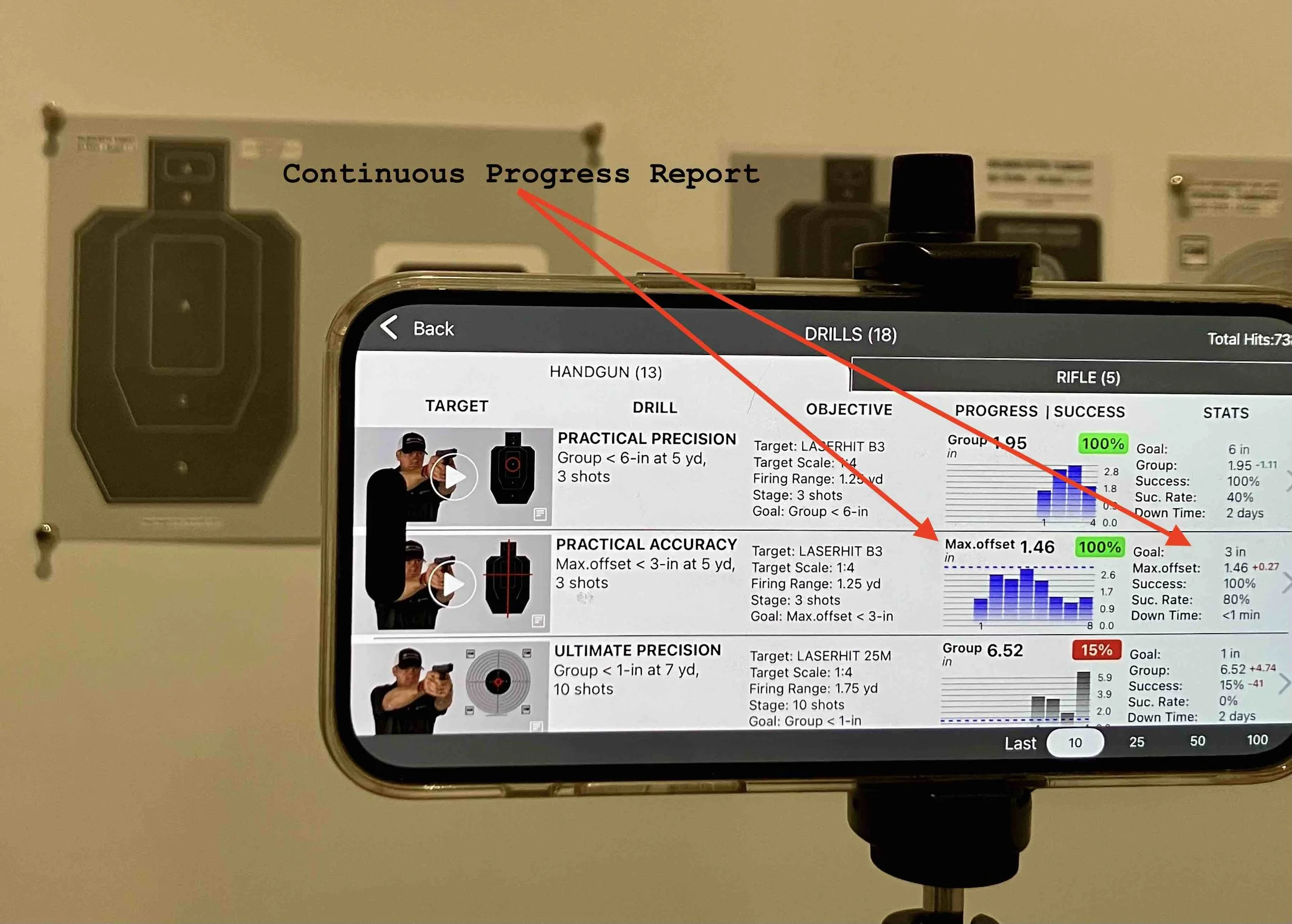
Each completed stage is added to a long-term performance profile specific to that drill. Data is not blended across categories or modes. Over time, the system tracks:
• accuracy relative to the goal
• most recent result and change from the previous stage
• success or failure of each stage
• overall success rate across sessions
• indicators of improvement or regression
• time since the last completed session
Together, these metrics answer practical questions that matter in training:
Is accuracy improving.
Is it consistent.
Does it hold under repetition.
Before You Go
Accuracy is not a feeling.
Accuracy is not how a string of shots feels. It is where they land.
LaserHIT DRILLS turn belief into measurement and assumption into proof.
If you’ve ever trusted a tight group that still missed the point, share your experience and let’s dissect it.