
Laser Zeroing in LaserHIT: Controlling Mechanical Offset Indoors
Laser Zeroing is the process that aligns LaserHIT’s measurement reference with your true point of aim. It is what turns accuracy-focused drills from estimation into measurement.
Because LaserHIT drills evaluate hits against fixed reference points, any misalignment between your sights and the laser emitter directly affects results. Without proper zeroing, the system may measure consistently, but it will not be measuring what you intended to shoot.
This post is written for shooters who take training seriously and want honest, defensible results. If your goal is purely recreational shooting, this step can be skipped.
Why Laser Zeroing Matters
In live-fire shooting, mechanical offset between the barrel and optic is resolved by zeroing the rifle at distance, typically 100 yards. Indoors, the geometry changes.
At 8 yards, a laser cartridge naturally impacts below the point of aim. Simply holding higher does not work, especially when using scaled targets and simulated distances. Adjusting optic turrets to force alignment at short range introduces additional problems:
• optics are not designed to zero at extremely short distances
• a visible laser dot interferes with proper sight use
• results become inconsistent across different target scales and simulated ranges
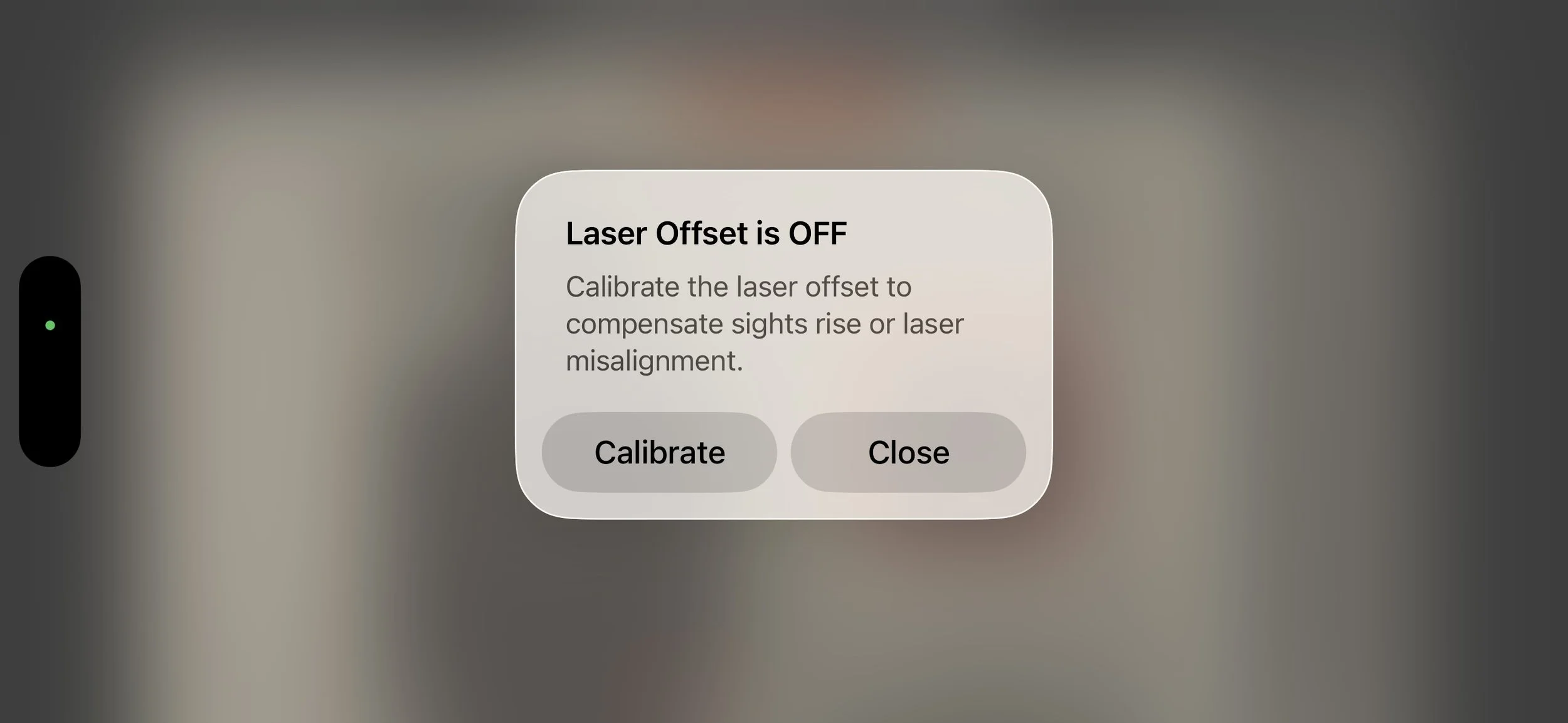
Laser Zeroing solves this by correcting mechanical offset digitally, inside the measurement system, without altering your optic or your shooting technique.
When to Perform Laser Zeroing
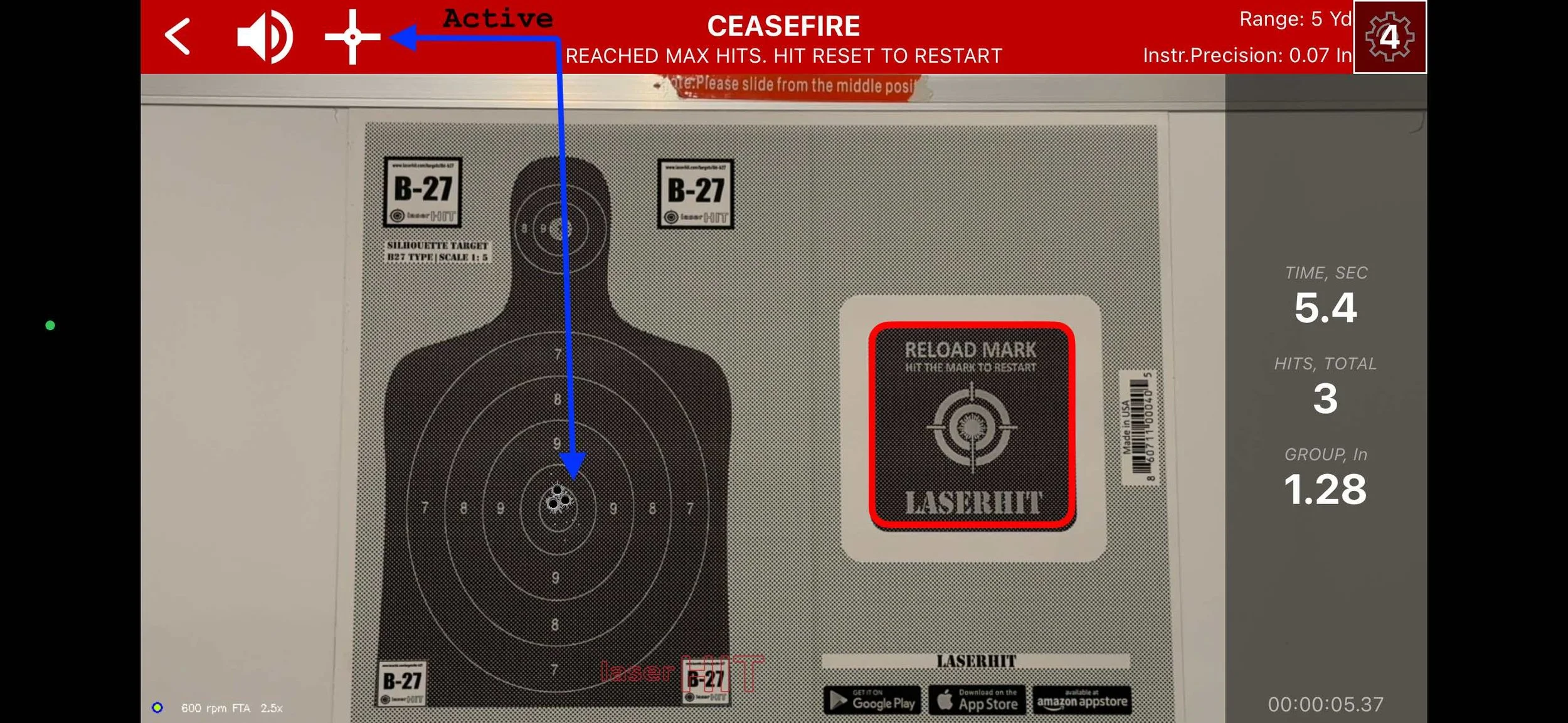
The best time to perform Laser Zeroing is immediately after completing a stage, at Ceasefire. Zeroing can also be performed during the first active stage of a drill.
How Laser Zeroing Works
When zeroing is initiated:
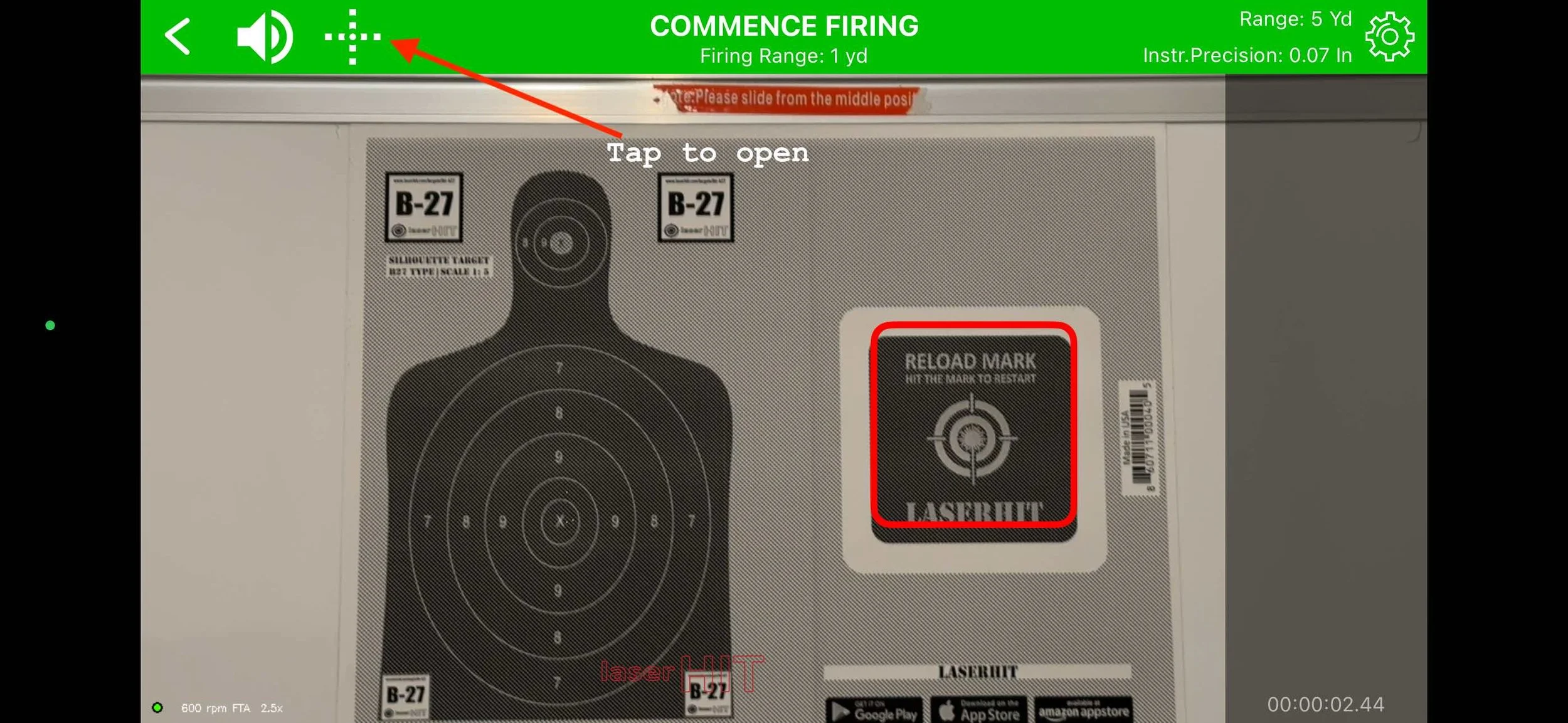
• tap the crosshair icon in the top panel
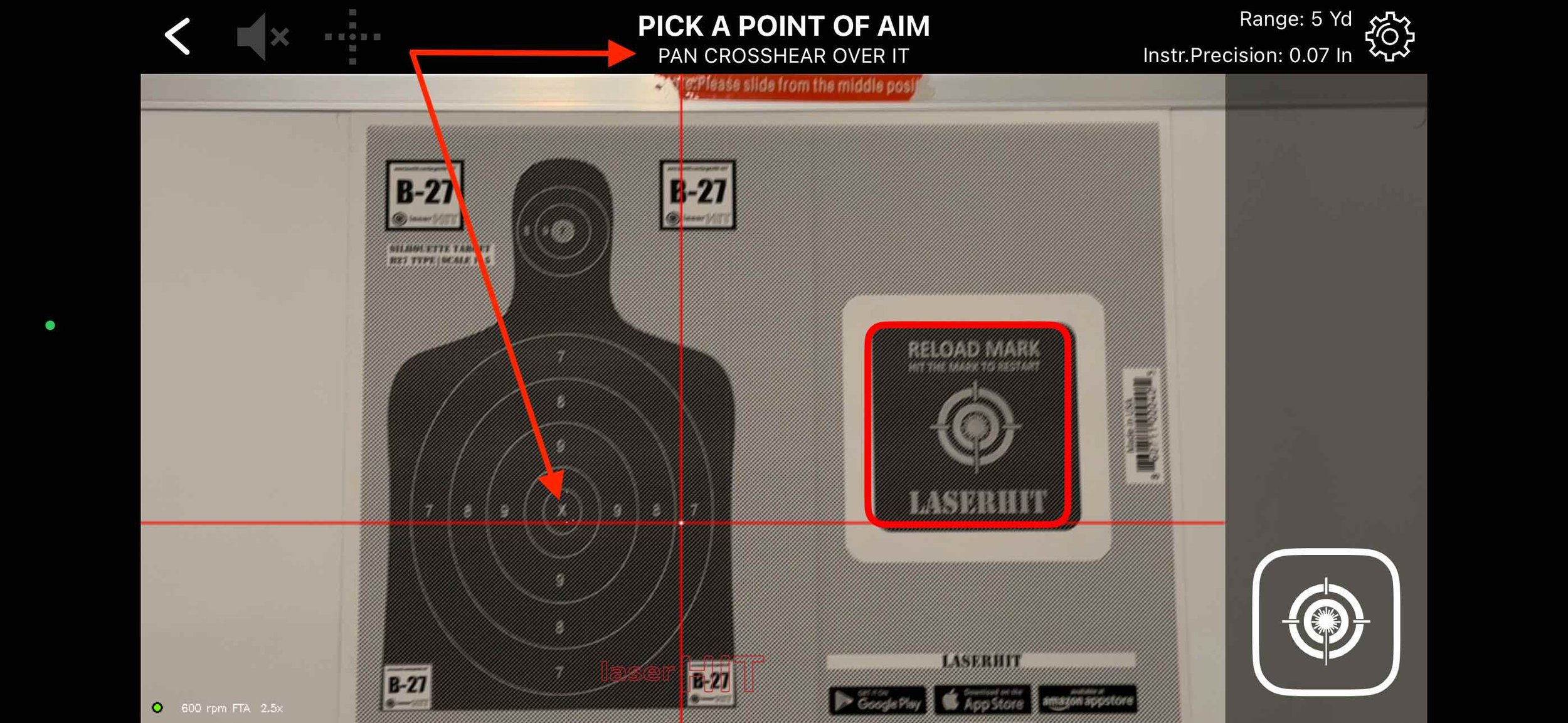
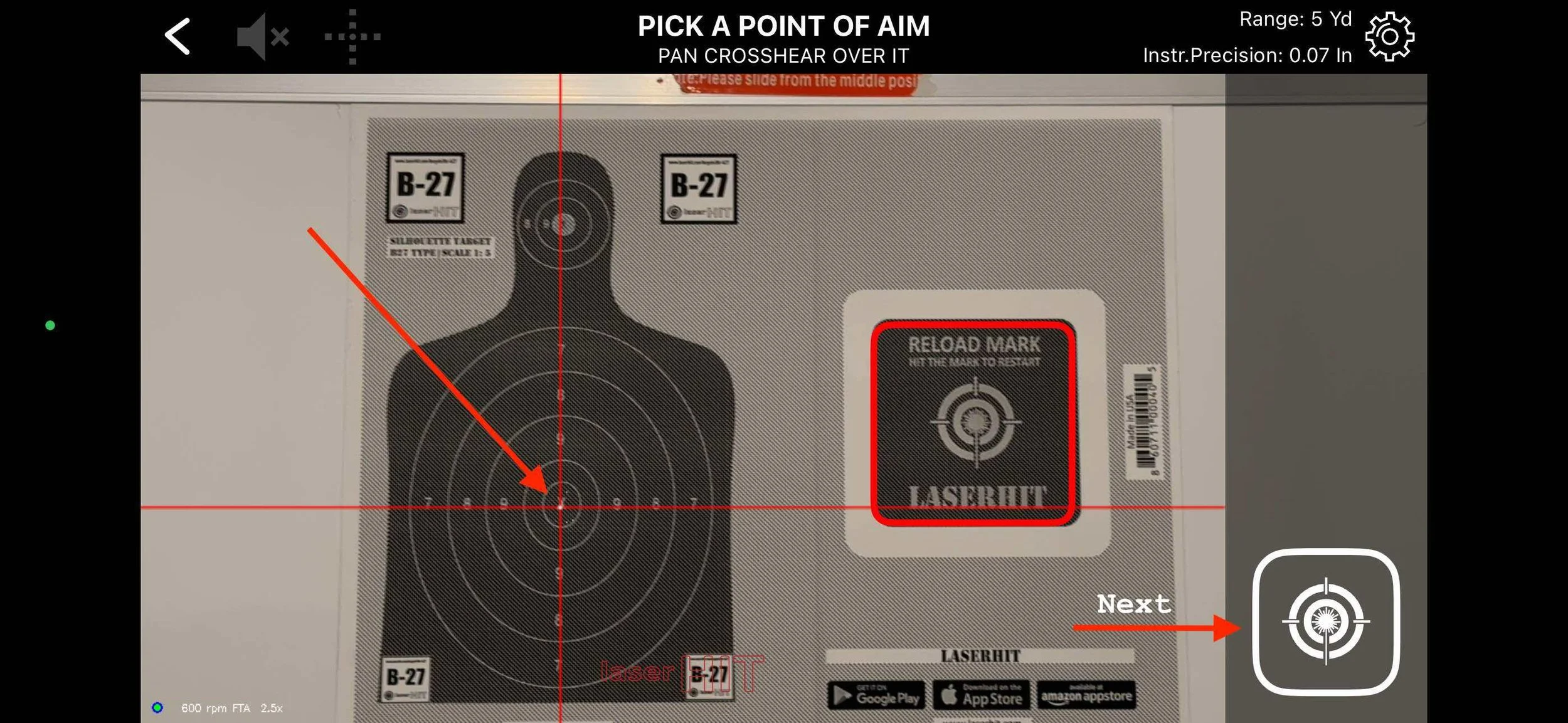
• align the on screen crosshair with your true point of aim
• tap Next, aim through your sights at the selected point of aim, and execute three verification shots
• confirm that Laser Zeroing is complete
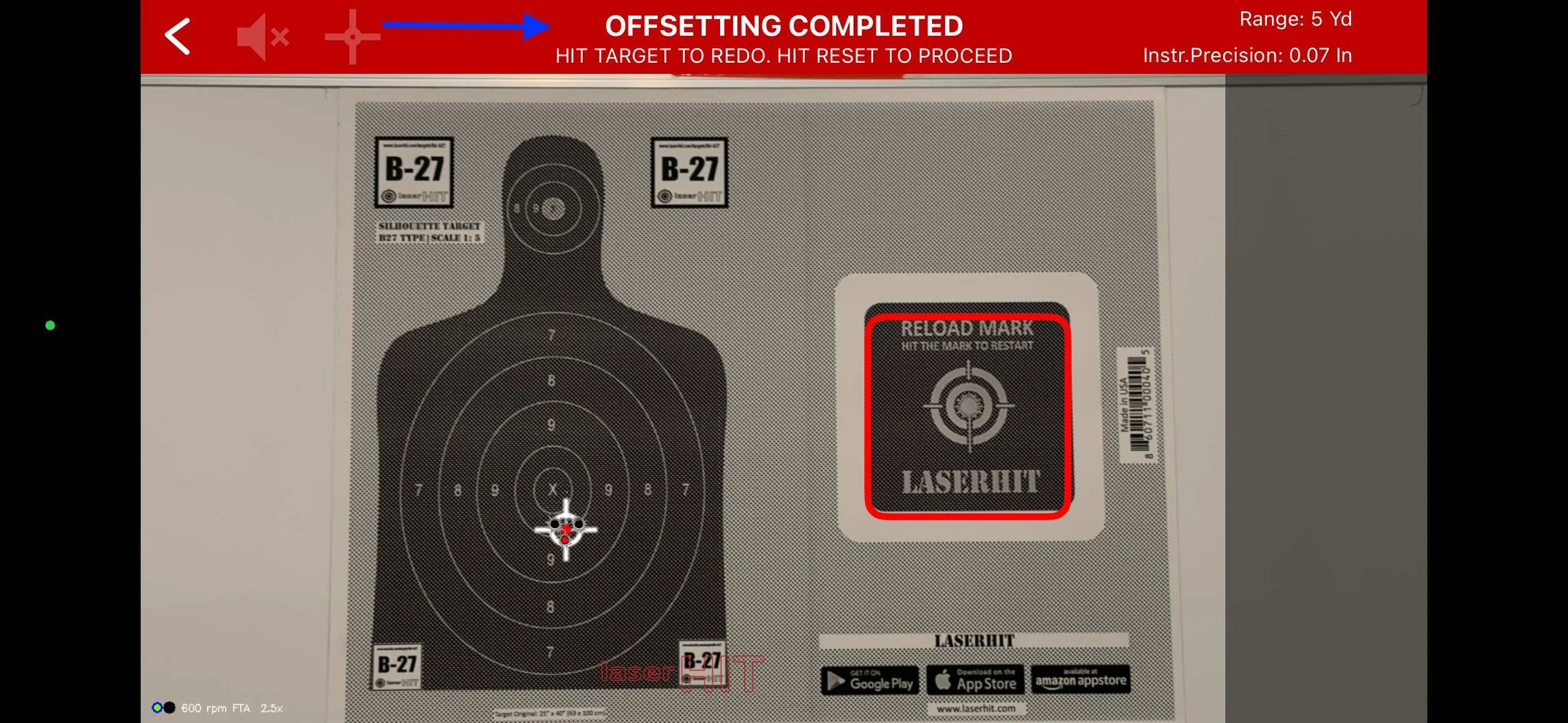
Small horizontal or vertical offsets are normal. The laser emitter sits below the line of the sights and cannot physically overlap the sight picture.
Once confirmed, LaserHIT applies the correction to all subsequent shots in that drill. Hit placement shifts immediately, and all measurements reflect true point-of-aim alignment.
What Laser Zeroing Affects
Laser Zeroing applies at the drill level. For best results, zero each drill independently, especially when:
• changing firearms
• removing or reinstalling the laser cartridge
• modifying target scale or distance
• altering the physical setup or target
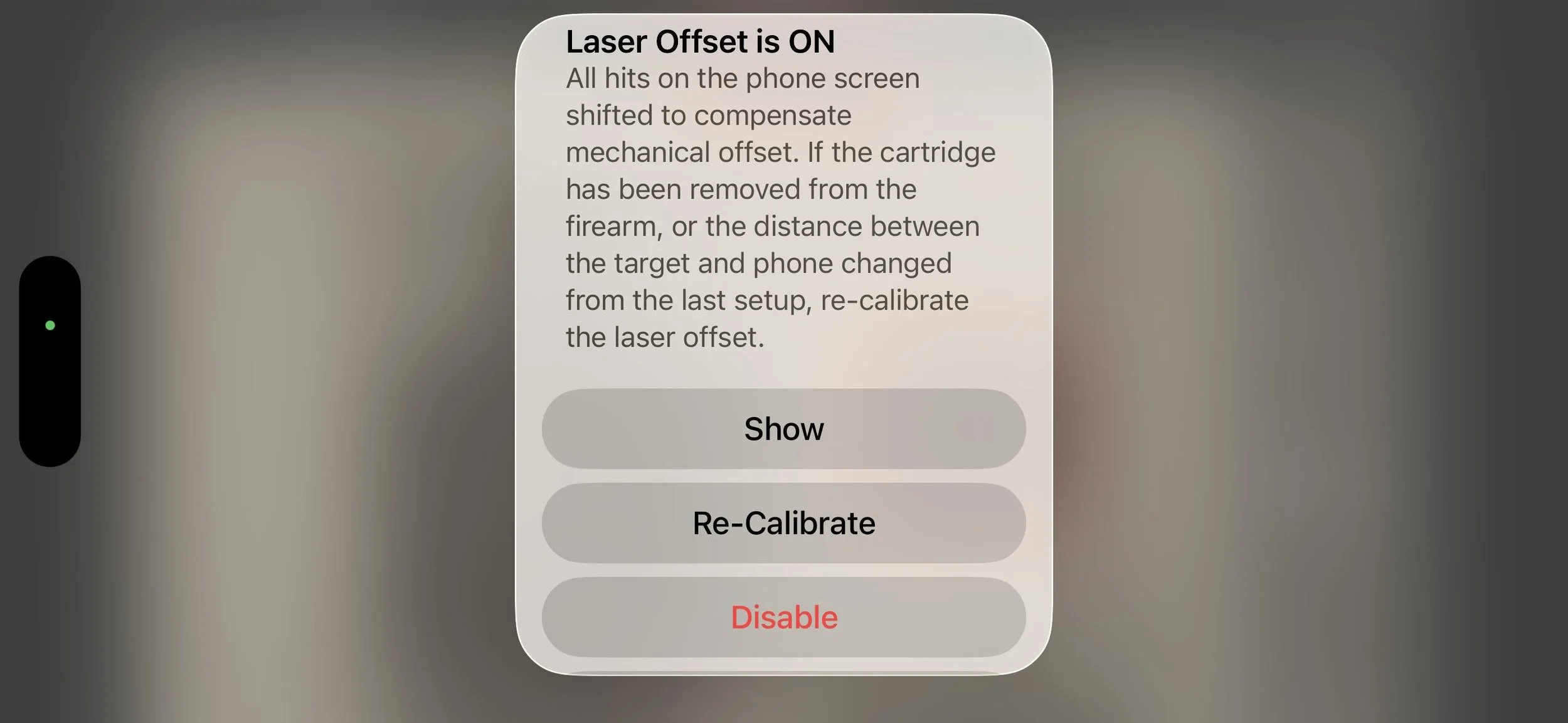
Zeroing is not permanent. Any change in hardware or geometry should be followed by re-zeroing to maintain measurement integrity.
A Built-In Alignment Check
Laser Zeroing also serves as a verification of cartridge seating. Each time a laser cartridge is removed and reinserted, small shifts can occur due to:
• O-ring compression
• chamber tolerances
• seating depth variation
Zeroing confirms that the cartridge and system are aligned before training begins. It is fast, reliable, and worth the few seconds it takes.
Practical Care Tip
Always remove the laser cartridge after training. This:
• prevents confusion with live ammunition
• protects the strike-cap electronics
• extends cartridge life
Occasionally applying a light coat of oil to the O-rings helps maintain consistent seating.
Hidden Tip for Long-Range and Ballistics Targets
Long-range and ballistics-ready LaserHIT targets include a reticle reference scale on the left side. Use it.
Align your optic’s reticle with the printed scale. Many shooters use the 20 MOA line as a reference.
• if your scope reticle appears lower than the target scale, you are too close
• if it appears higher, you are too far
Adjust your firing distance until the reticles align exactly. This confirms correct geometry before zeroing.
Before You Go
Laser Zeroing is not a formality for serious shooters. It is the step that makes indoor accuracy training credible.
Do it carefully, and you gain confidence that your rifle, your cartridge, and the LaserHIT system are working as one.