How Your Scope Handles Indoor Long Range up to 1000 Yards
Focus Adapter for Rifle Scope: Do You Need One?
Indoor long-range dry-fire training raises a common question:
How will my scope focus at 8 yards if I normally shoot at 100 yards and beyond?
This is where the Focus Adapter comes in.
But the important part is this. Not every shooter needs one.
What the Focus Adapter Actually Does
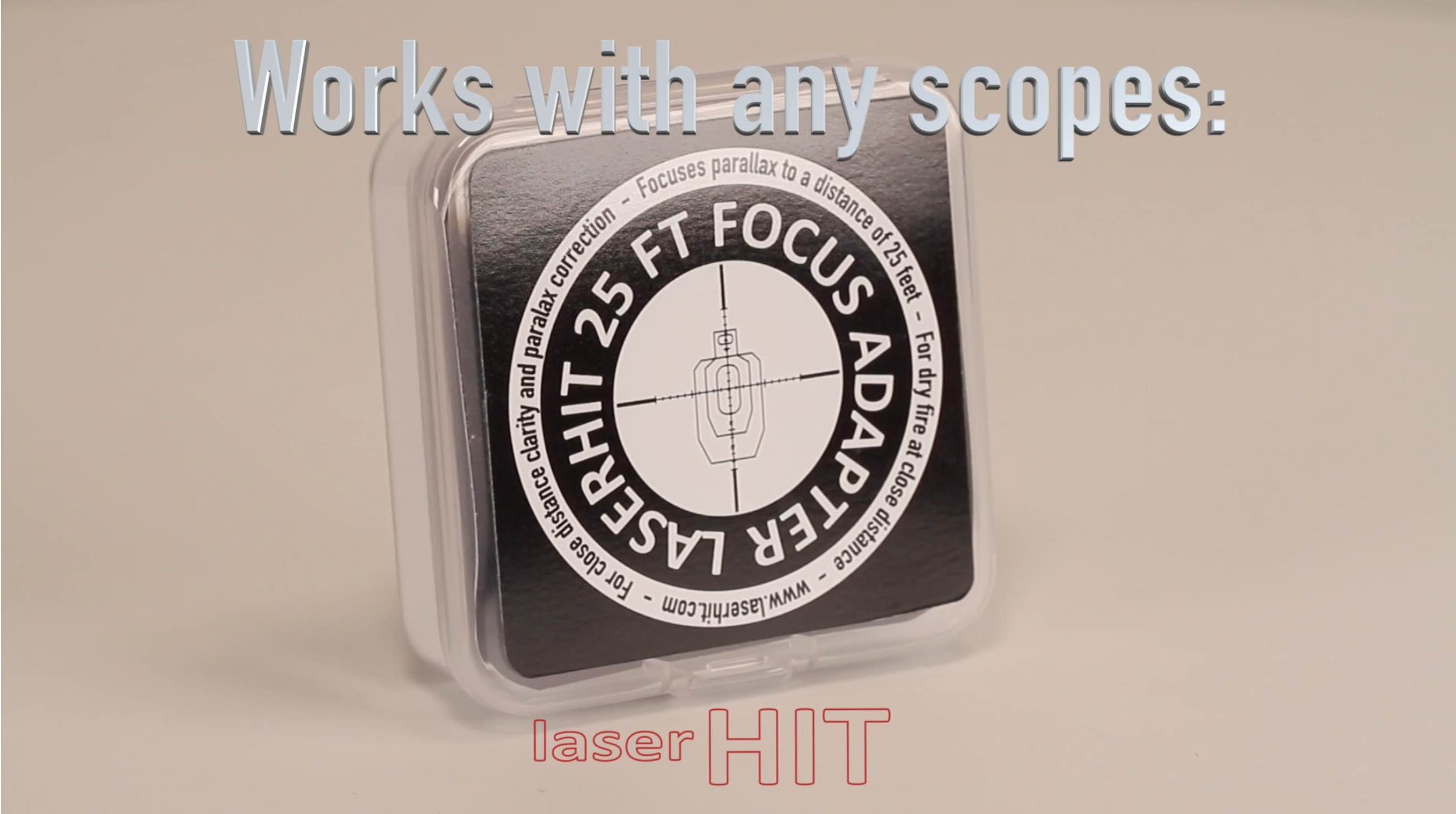
The Focus Adapter allows your rifle scope to function properly at close indoor distances.
At approximately 8 yards, most rifle scopes:
• cannot focus clearly on the target
• show reticle or target blur
• introduce parallax inconsistencies
The Focus Adapter shifts the focal distance of your optic so it can:
• maintain a sharp target image
• keep reticle clarity
• eliminate parallax error at short distance
This creates a stable and repeatable visual setup for dry-fire training in confined spaces.
Why It Is Not Included in the Kit
The Focus Adapter is not included in the Long Range Training Kit by design.
The reason is simple. It is not required for every user.
We do not want to force an additional purchase if your setup already works without it.
When You Do Not Need a Focus Adapter
You may not need a Focus Adapter if:
• your scope can already focus clearly at indoor distance, for example at 10 or 16 yards
• some high-end optics support short focus distances, such as Vortex Strike Eagle 5-25x56 or Nightforce ATACR 7-35x56 F1
• you are training with iron sights
• you are using a red dot on your AR-15
• you are practicing at shorter recreated distances such as 100–200 yards with our scaled targets
• you already use another solution such as DFAT-style adapters
In these cases, adding a Focus Adapter provides little or no benefit.
When You Do Need a Focus Adapter
You will likely need a Focus Adapter if:
• your target appears blurred at 8 yards
• you cannot clearly resolve smaller targets or reticle marks
• you are training at higher magnification
• you want consistent and repeatable precision results
This becomes more important as you move into:
• 300–1000 yard scaled training
• MOA or MRAD-based drills
• grouping and precision validation
• LaserHIT training with ballistics (currently iOS only)
Choosing the Correct Focus Distance
Focus Adapters are fixed-distance devices.
The correct choice depends on your available training space.
Common LaserHIT setups:
4 yards
Used for compact setups
Typical training range: 25–400 yards equivalent
Use DFAT Focus Adapter 12 feet
8 yards
Most common setup
Typical training range: 25–1000 yards
Use LaserHIT Focus Adapter 25 feet
16 yards
Large indoor space
Extended training distances beyond 1000 yards
Use LaserHIT Focus Adapter 50 feet
The key is the actual distance between your scope focal plane and the target.
What Else Affects Scope Clarity
Focus Adapter performance is also influenced by:
Lighting
Even lighting is critical. Overexposed areas reduce clarity and detection.
Magnification
Higher magnification requires better optical clarity.
Shooting position
Bench, prone, tripod, or barricade setups can affect viewing angle and lighting.
Targets
To keep training realistic, use LaserHIT long-range scaled targets.
[LINK] long range targets
Compatibility and Mounting
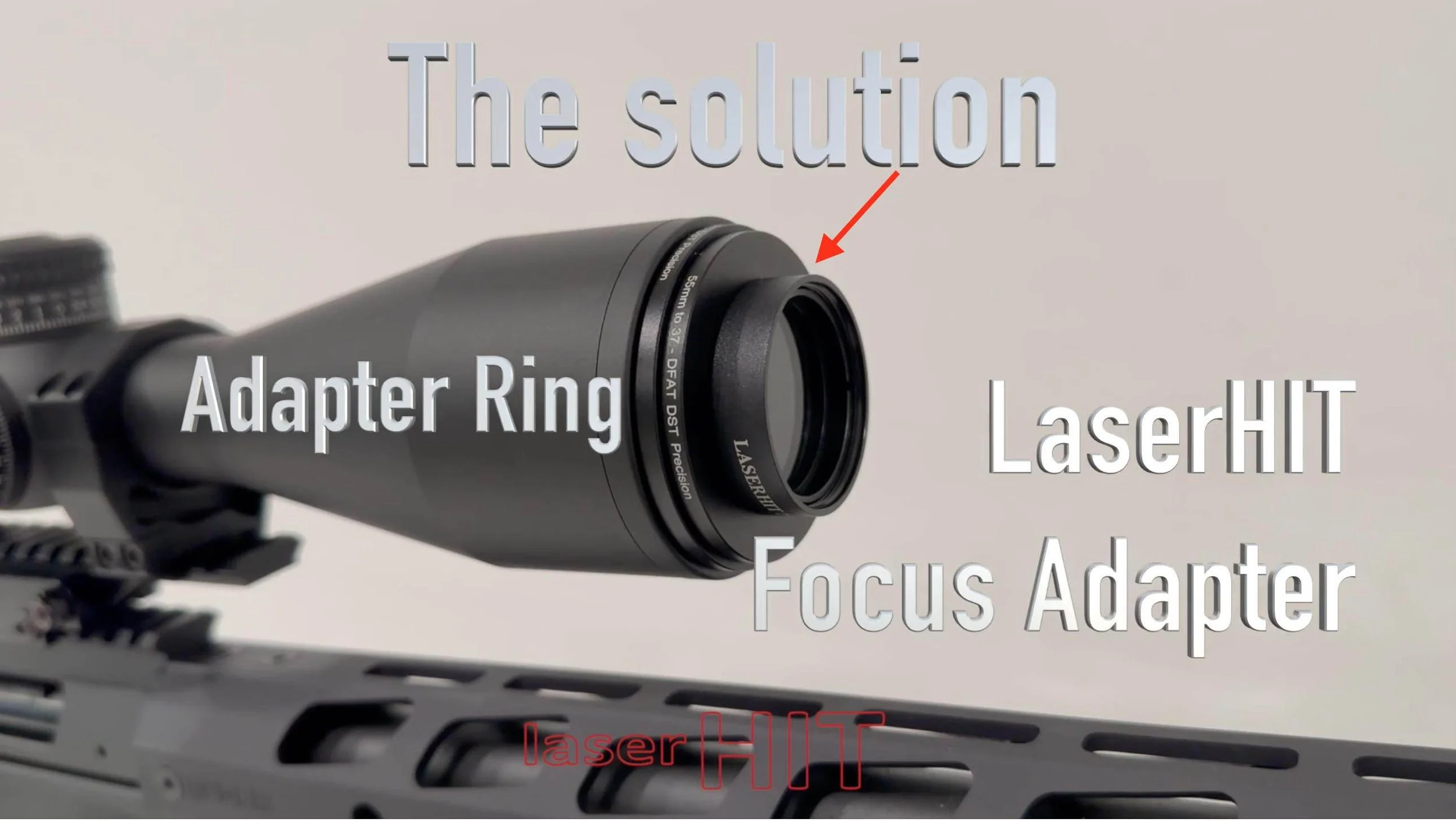
The LaserHIT Focus Adapter:
• fixed focus at approximately 25 feet
• 37 mm screw-in mount
• compatible with fixed and adjustable focus scopes and LPVO
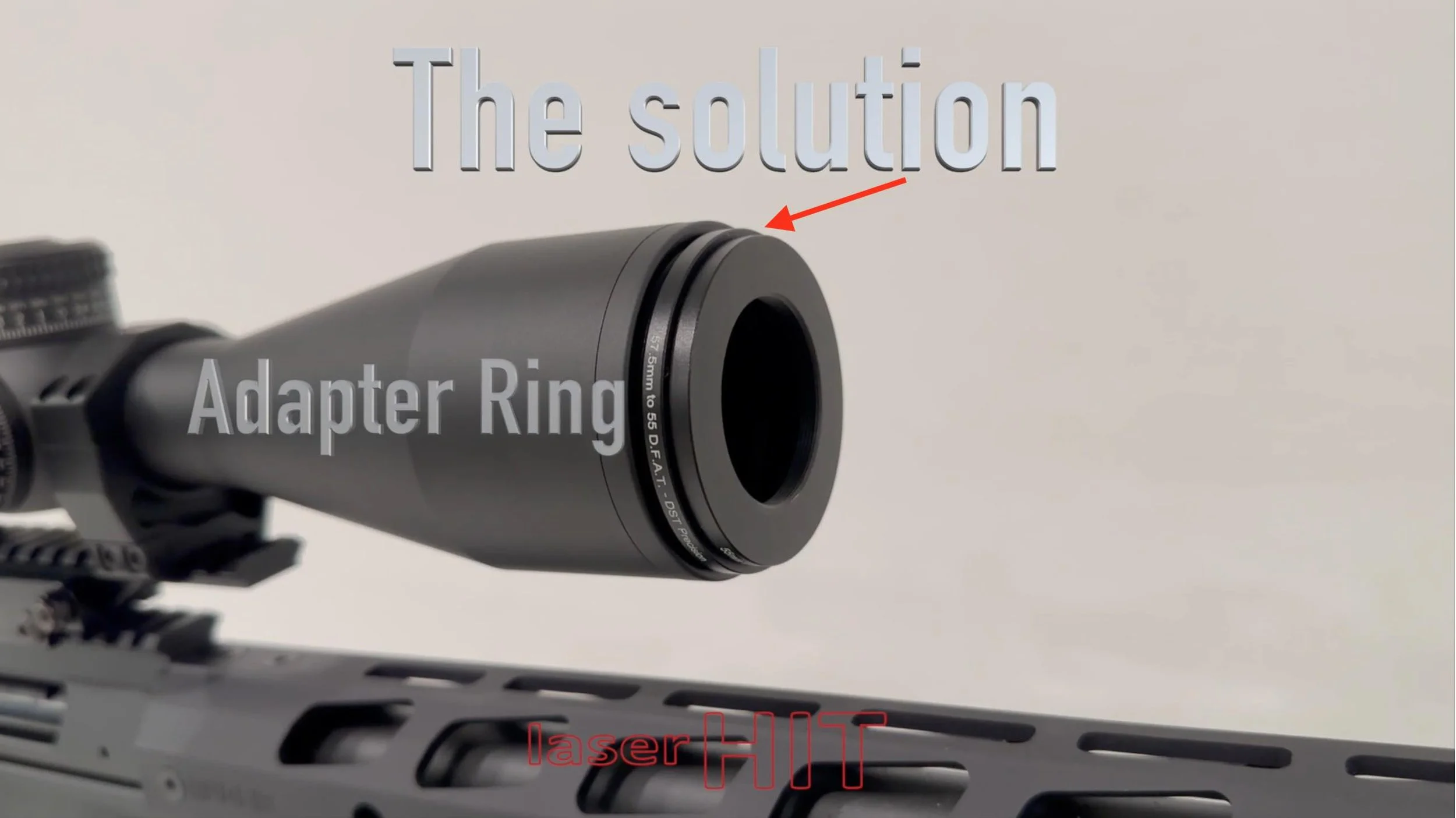
Mounting requires a connection ring.
Options:
• metal ring matched to your scope
• one of four universal adjustable polymer rings from 21 mm to 66 mm
Important Notes
• for dry-fire only
• do not use during live fire
• adapter and mounting ring are sold separately
Before You Go
The Focus Adapter is not a required component.
It is a precision tool for shooters who need:
• sharper image
• consistent focus
• better control of optical variables
If your scope already performs well at your indoor distance, you may not need it.
If clarity limits your training, the Focus Adapter becomes essential.
The final decision depends on your setup, your space, and your training goals.