
V4.4 / Free Target / Pro Firing Range Setup
PRO FIRING RANGE SETUP
FREE TARGET PRACTICE


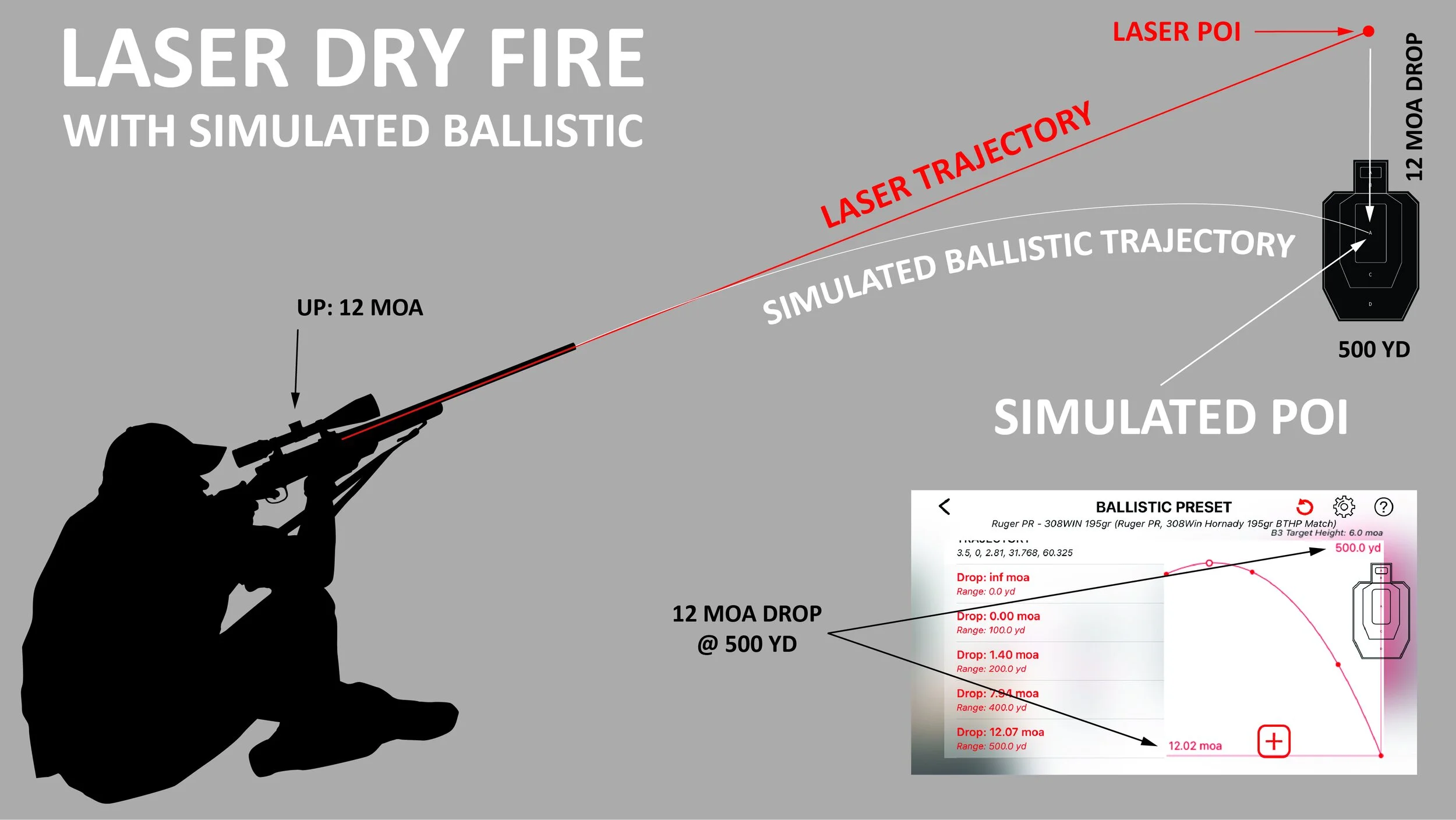
The Pro Firing range setup is designed for experienced users and professionals. It is suitable for all types of firearms, from handguns to semi-automatic or sniper rifles. The Pro setup is the most realistic shooting simulator on the market to date, with advanced instrumental measurements and projectile ballistics. You can practice with full-size or scaled targets in simulated firing ranges, from point-blank to extreme long range of one mile, in your home environment.
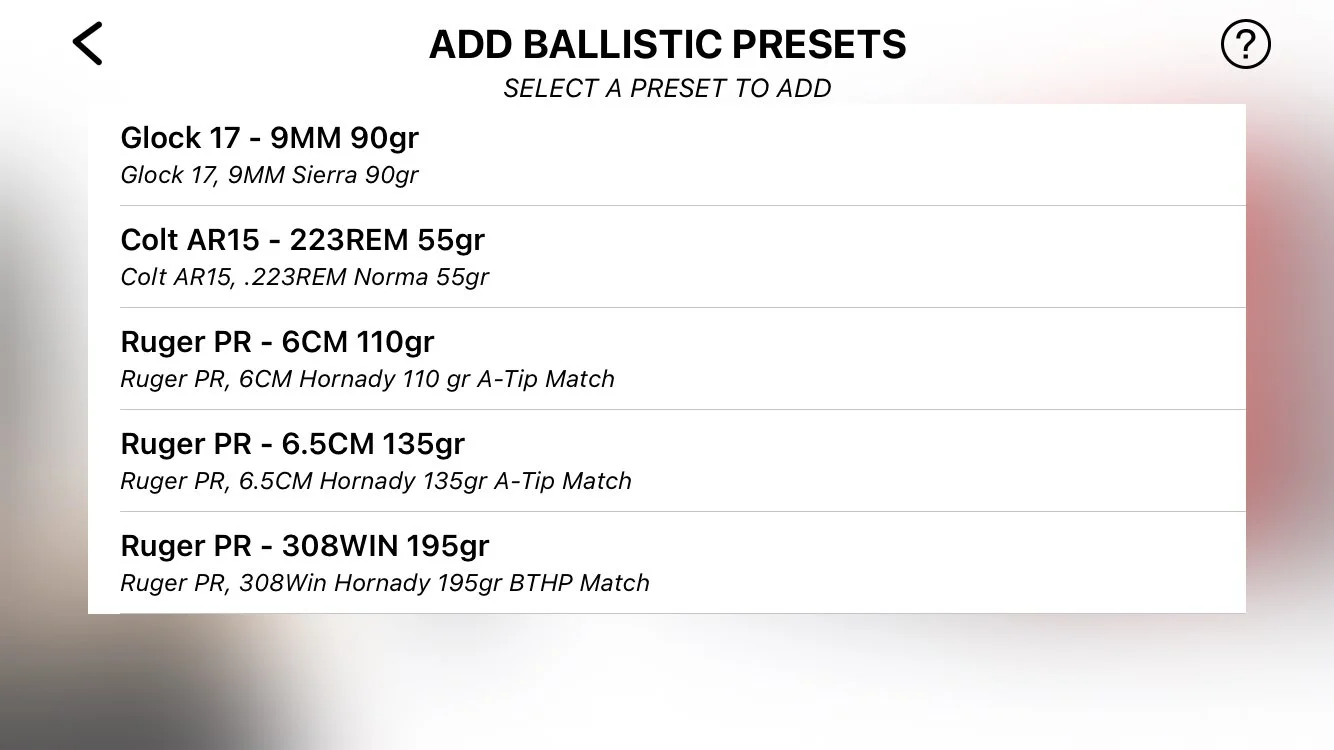
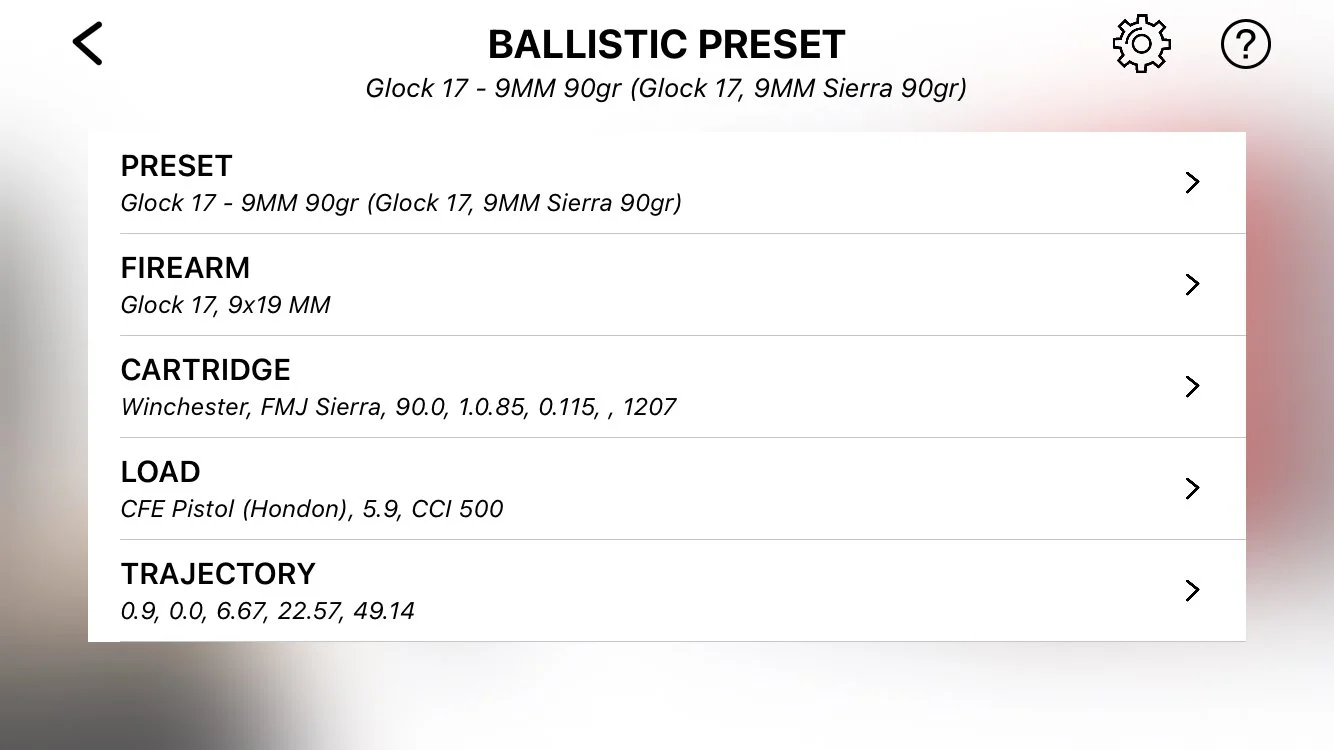

You can use pre-loaded ballistic presets or create your own, suitable for your rifle, handgun, and load. Each preset has a ballistic trajectory simulator that applies a projectile drop at a simulated distance in real-time. The trajectory simulator is not a ballistic calculator but a set of range/drop value pairs used to calculate drop at any simulated distance with sub-MOA precision. You can edit the trajectory using your favorite ballistic calculator or actual range/drop values measured on the field. This allows you to customize the preset to match the actual ballistic of your setup, ensuring the most accurate and realistic shooting simulation experience.
GLOSSARY
Screen Mirroring: Screen mirroring allows you to project the content displayed on your smartphone or tablet onto a wirelessly or wired-connected TV.
Firing Distance: Actual distance from a target to the firearm’s front iron sight or front lens (red dot, scope's turrets).
Target Scale: the ratio between the size of the actual target and a representation of that target. It will be automatically determined by Application.
Simulated Distance: the result of Target Distance multiplied by Target Scale Factor.
Instrumental Precision: The smallest increment the App can detect and measure reliably.
Units, TMOA: True Minute of Angle is a unit of angular measurement equal to 1/60th of 1 degree. 1 TMOA is equal to 1.047 inches at 100 yards.
Units, SMOA/MOA: Shooters Minute of Angle (Simplified TMOA). 1 SMOA is equal to 1 inch at 100 yards.
Units, MRAD: A milliradian is an angular measurement equal to 1/1000 radian. One MRAD is equal to 1.02 meters at one kilometer.
Units, MIL/NATO-MIL: (Simplified MRAD). 1 MIL is equal to 1 meter at 1 kilometer. 0.1 MIL is equal to 10 cm at 100 meters.
Hits Group: Under simulated distance, the maximum distance between any two hits on the target (center-to-center) during your practice.
Windage: Windage measures the horizontal distance from the point of aim to the point of impact at the simulated distance.
Elevation: Elevation measures the vertical distance from the point of aim to the point of impact at the simulated distance.
First Focal Plane Reticle: A first focal plane (FFP) reticle changes sizes according to the phone screen's target size.
Vital Zone Radius: The circle's radius with center at the point of aim.
Virtual Spotter: The digital assistance within the App to track and announce your hit. There are options to select: hit correction or hit placement. NOTE: On-screen results will always display the actual hit placement.
Digital Magnification (iOS only): Upscale part of the camera with the center at the point of aim.
SPECIFICATION
Distance Units supported: Feet, Yards, Meters
Simulated Distance range: 3-5,280 feet, 1-1,760 yards, 0.9-1,609 meters
Firing Distance range: 3-52.8 feet, 1 - 17.6 yards, 0.9-16.1 meters
Target Scale supported: 1:1 - 1:100
Measurements and calculation: Simulated Distance, Instrumental Precision, Hits Group, Windage, Elevation, Vital Zone hits (target hits)
Units for measurement: inch/cm, SMOA, TMOA, MIL, MRAD
Instrumental Precision, angular: up to 0.1 MOA / 0.03 MIL/MRAD
Instrumental Precision, linear: up to 0.02 inch / 0.05 cm
First Focal Plane Reticle, units: inch/ cm/ SMOA / TMOA/ MIL/ MRAD
Digital Magnification (iOS only): x4 (toggled remotely)
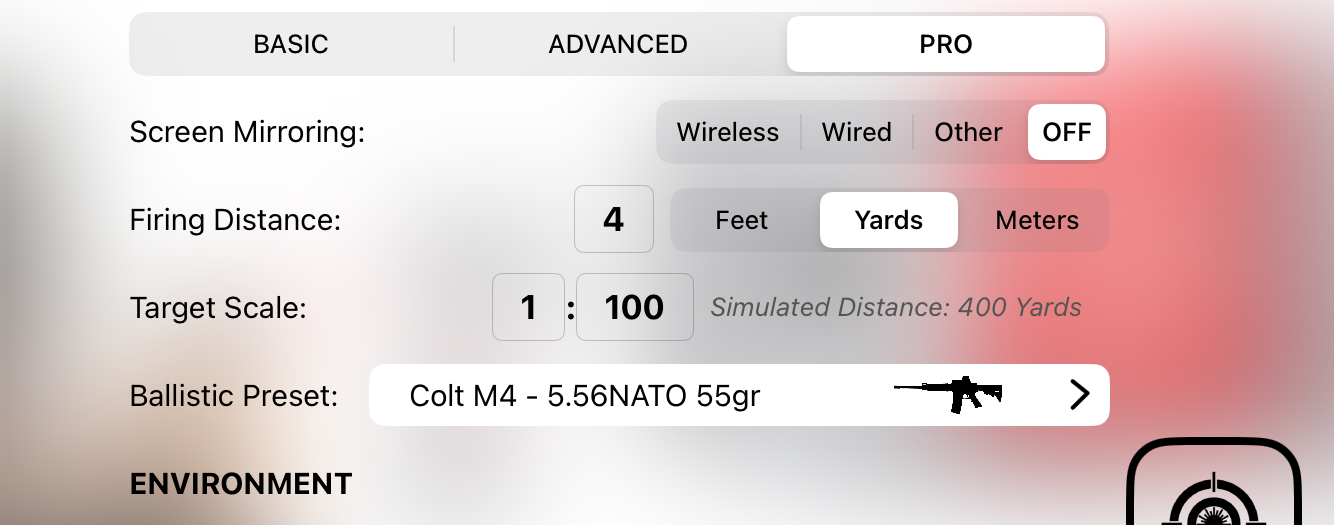
PRO SETUP SETTINGS
Screen Mirroring:
To mirror your phone screen using the LaserHIT Wireless-X adapter, select “Screen Mirroring: Wireless,” then visit page laserhit.com/wireless for instructions;
To mirror your phone screen using the LaserHIT wired adapter (mirroring cable), select “Screen Mirroring: Wired,” then visit the page laserhit.com/wired for instructions;
To mirror your phone’s screen using your mirroring device (Apple TV, Chromecast, etc.), select “Screen Mirroring: Other,” then start mirroring according to the device’s user manual;
To continue without mirroring, select “OFF”, then proceed.
Firing Distance: Select units (Feet, Yards, or Meters) and enter the distance value. For iron sights, enter the distance from the front sight. For a red-dot or a scope, enter the distance from the front lens. Tap anywhere on the screen to close the keyboard.
Target Scale: Enter your target scale factor. For example, if you have a target with scale 1:4, enter 4. The app will calculate Simulated Distance in selected units. If the target scale is unknown, enter 1 (be aware, that it will affect the precision calculation).
BALLISTIC PRESET:
Off - default option
Tap on the panel to open Ballistic Presets. Tap on the [+] sign to expand the library of Firearm presets.
Tap on any Firearm to select. To explore all available options for the firearm preset, tap one more time on it. Select from the DOPE card, Review&Edit, Duplicate, Delete, Cancel.
DOPE Card: It could be viewed as a Chart or Graph. The data units could be changed by tapping the Settings icon at the top of the screen. It contained the Ballistic drop and wind drift data in 100-yard steps. The data was based on the pre-determined Firearm description and ammunition profile.
Review&Edit: There are five categories to be expanded:
Preset (Name, Description, firearm icon selection (tap on it)),
Firearm (Name, caliber, sight name, sight height *, sight zero distance*),
Cartridge (brass, bullet, bullet grains, C.O.L., G1.B.C., G7.B.C, muzzle velocity),
Load (powder, powder grains, primer)
Trajectory (bullet drop and wind drift interactive chart)
* need to be reviewed and edited under Trajectory to become visible and applicable.
Duplicate: use this option if you found a similar existing preset in the LaserHIT library but would like to modify it.
Delete: it is up to you to delete the ballistic preset profile.
Screen Top panel navigation: As you save more than one profile on your front Ballistic preset screen, an up and down arrow will display your preferences and profile priorities.
Custom preset: tap on it to start with your custom preset.
NOTE: You should already create and export your own Firearm profile with an external Ballistics calculator (GeoBallistics, Hornady, or Ballistics AE). Each calculator can Export DOPE card/profile information to Photos or Files on your mobile device (open these calculators on it). So, back to LaserHIT app.
Hint: While you review and edit your newly created firearm preset, explore the firearm imaging list by tapping on the download icon on the left side of the preset name.
Importing Your DOPE Card Data
Follow these instructions to import your DOPE card data. Once the import is complete, you can customize your firearm and ammunition profile by selecting the newly created preset and tapping Review & Edit.
Note: You also have the option to manually input your DOPE card data from field observations by entering drop and drift information manually.
Select an existing firearm profile and duplicate it.
Open the duplicated profile by selecting Review & Edit.
Customize all necessary fields as needed.
Tap Trajectory to adjust the target position by moving it left-right and up-down to review and edit the drop and drift points.
Option 1: Import to Photos with GeoBallistics App
Tap the Ballistic Calculator link at the top of the LaserHIT screen to access the GeoBallistics App.
Download GeoBallistics or open the existing app on your phone.
Create a profile for your rifle and ammunition, or select an existing profile from My Rifles.
Confirm your range distance limits.
Specify the shot angle in degrees.
Leave the wind direction and speed at default (10 mph/kmh at 90°).
Confirm the rifle sight height in inches or centimeters.
Note: Weather data is currently not applicable.
In GeoBallistics, tap Chart to review the DOPE card.
Tap the Export icon, select Export to Photos, and tap OK.
Return to the LaserHIT app Trajectory Import screen.
Tap Import and select the DOPE chart image from Photos.
Tap Choose, confirm that all rifle data (highlighted in red) is imported correctly, and tap the back arrow.
Specify the sight height as a mandatory step. Change the range units to meters (Wheel icon) to switch to centimeters.
Tap your newly created firearm profile to view the DOPE card or select Review & Edit.
Option 2: Import to Files with Hornady Ballistic Calculator
Tap the Ballistic Calculator link at the top of the LaserHIT screen to access the Hornady ballistic calculator.
Select 4DOF under "Choose Calculator."
Create a profile for your firearm and ammunition. Use default settings in the Display Fields section.
Calculate the ballistic profile and select Download spreadsheet as a .csv file to Files on your phone.
IMPORTANT:
Confirm your range distance limits.
Specify the shot angle in degrees.
Leave the wind direction and speed at default (10 mph/kmh at 90°).
Confirm the rifle sight height in inches or centimeters.
Note: Weather data is currently not applicable.
Return to the LaserHIT app Trajectory Import screen.
Tap Import and select the DOPE chart .csv file from Files (it should be the first file in Recents).
Confirm that all rifle data (highlighted in red) is imported correctly, and tap the back arrow.
Specify the sight height as a mandatory step. To switch to centimeters, change the range units to meters.
Return to the Ballistic Presets screen. Tap your newly created firearm profile to view the DOPE card or select Review & Edit.
Option 3: Import as Copy-Paste with Hornady Ballistic Calculator
Tap the Ballistic Calculator link at the top of the LaserHIT screen to access the Hornady ballistic calculator.
Select Standard under "Choose Calculator."
Create a profile for your firearm and ammunition. Refer to the "IMPORTANT" section above and use default settings in the Display Fields section.
Calculate the ballistic profile and select Copy results.
Return to the LaserHIT app Trajectory Import screen.
Tap Import, and the LaserHIT app will prompt you with an "Allow Paste" message. Confirm your permission.
Navigate to the Ballistic Presets screen. Tap your newly created firearm profile to view the DOPE card or select Review & Edit.
ENVIRONMENT:
Wind Speed: Select units first, then the maximum and minimum values. To set up a constant wind, select the same value for minimum and maximum.
Wind direction: select crosswind or 360-degree
MORE SETTINGS
Windage/Elevation measurement units: inch, cm, SMOA, TMOA, MIL, MRAD
Group, Vital Zone measurement units: inch, cm, SMOA, TMOA, MIL, MRAD
Note: some units must be selected to activate visual and audible feedback options.
Vital Zone Radius: custom assignment of the Vital Zone on your target. It will be placed in the middle of your target.
Hint: If you plan to use Targets with a “shifted” Vital Zone (for example, a hunting target, “deer”), please go to Black Steel practice and utilize the Custom target setup.
Target Tracking: Lock On, Follow, OFF
Lock On: Drag the crosshair to the target and release at any point of the target shape. The app will automatically find the target center and lock on it. When lock-on is completed, the crosshair will turn red. If it moves, the crosshair will follow the point of aim. This option is helpful for Long-Range targets with a small scale (target scale 1:10 or more).
Follow: Drag the crosshairs to the point of aim and wait until they turn red. If the point of aim moves, the crosshairs will follow it. Use this option with full-size or low-scale targets (target scale 1:10 or less).
NOTE: The target height and width should not exceed five times the Vital zone radius.
OFF: The tracking is disabled.
ON-SCREEN RESULTS: select Show or Hide
Windage/Elevation: the windage and elevation placement for each hit will be displayed
Group: the group for each target will be displayed when more than one hit occurs
VIRTUAL SPOTTER (each Hit Announcement):
Windage/Elevation: select between Hit Correction/Hit Placement/Off
COMMON SETTINGS:
Digital Magnification Lens: Select Enable to toggle the additional magnification lens, which will enlarge your small target fourfold on the phone screen.
Note: To toggle the magnification lens during the setup, tap on the phone screen.
To toggle the Magnification lens during practice, hit the target nearby after CeaseFire (do not hit the Reload Mark).
Hit, Size: The slider to resize or enlarge the hit graphical presentation on the device screen.
Hits, Max: The customized number of hits in the Practice session
Timeout, Sec.: The customized time setup per Practice session
Restart Min-Max Delay, Sec.: The customized delay setup to start Commence Fire for every Practice session. The minimum delay range is 3 to 10 seconds. The maximum delay range is 3 to 30 seconds. Assign the same number to minimum and maximum delays to set up a constant delay.
Sensitivity Settings: This is a sub-menu for adjusting the phone camera sensitivity to laser registration, indoor light conditions, or phone/target movements.
NOTE: Tap on each Sensitivity title for details about each sensitivity condition and affections of adjustments.
Voice Reports: Custom audible is set up to highlight the achievement of the specific training goals.
NOTE: Tap on the [+] sign to create your audible announcement.