
LaserHIT Composite Laser Cartridges: More Calibers, More Training Freedom
A Small Addition with a Major Impact on Training
Back in 2023, LaserHIT introduced long-range laser cartridges and opened the possibility of scientifically measurable mid-range and long-range dry-fire training in confined indoor spaces.
Since then, we have received consistent feedback from shooters and instructors:
Do you support .300 Federal calibers?
Will you produce .30-06?
When will 7 PRC become available?
Do you have 6.5 PRC in stock right now?
These are not niche questions. They represent real training needs.
At the same time, many of these calibers are not viable for traditional mass production:
• limited demand volume
• low manufacturing profitability
• complex cartridge geometry
• challenges in maintaining repeatable laser alignment
From Limitation to Capability
After three years of experimentation, testing a variety of materials, process development, and component standardization, we are introducing:
LaserHIT Composite Laser Cartridges
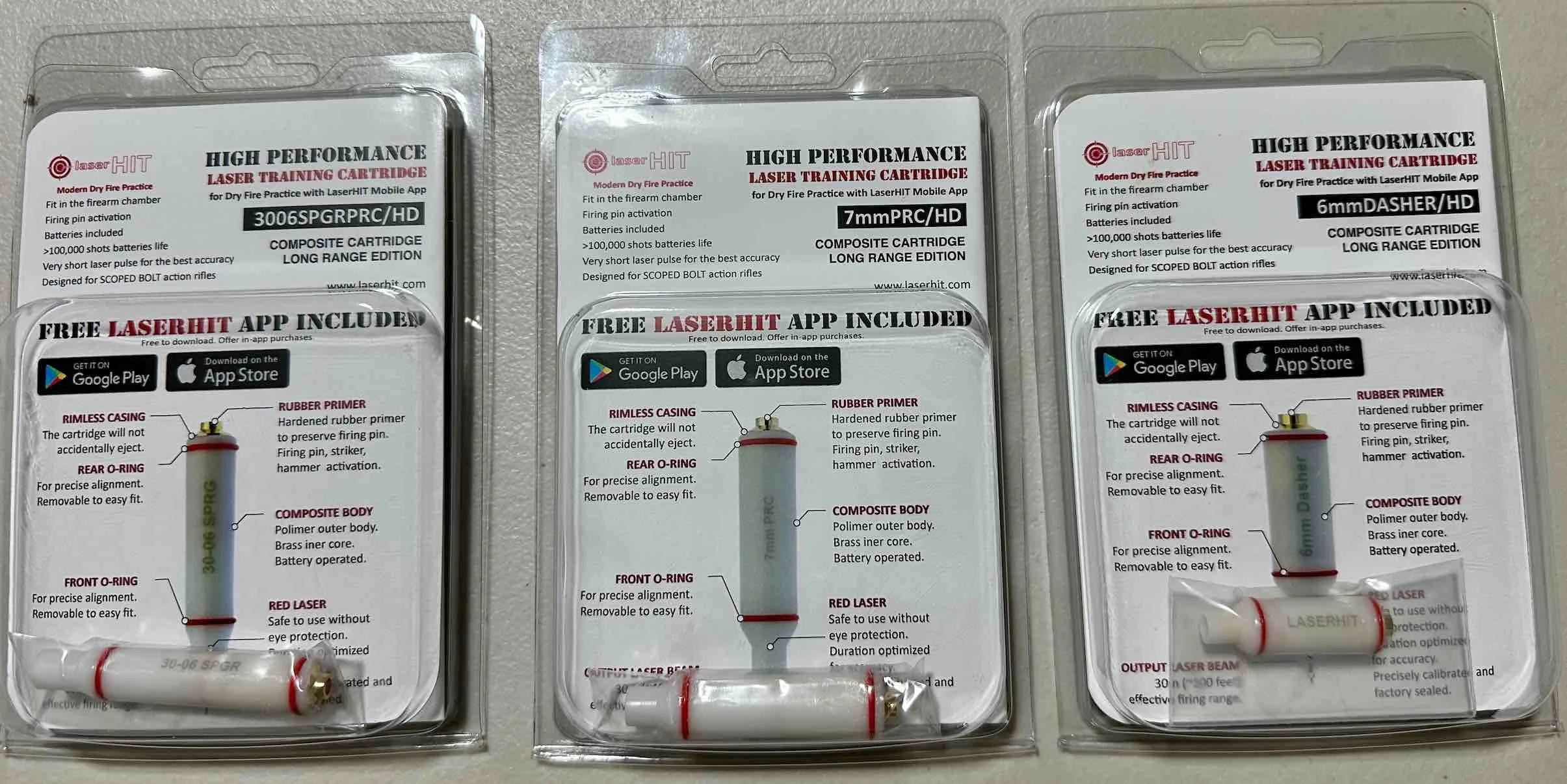
Supported caliber dimensions range from 6 mm Dasher up to .338 Lapua Magnum.
Additional calibers within this dimensional range can be manufactured upon request.
This is already live and available on our website.
Why It Matters
Training effectiveness depends on consistency between:
• firearm
• chamber
• optic
• real ballistic data behavior
• recreation of environmental conditions
When these elements are aligned, training becomes meaningful.
LASERHIT composite cartridges close the gap between:
• dry fire
• real-world shooting conditions
• firearms that are not part of mass production
This is where the real impact comes from.
Getting Started with a Composite Laser Cartridge
Using a composite cartridge follows the same core principles as LaserHIT HD and LR cartridges, with a few important additions.
Basic Handling - Important
Follow standard LaserHIT composite laser cartridge care:
• apply a light amount of gun oil to the O-rings periodically to ensure smooth insertion and prevent the cartridge from becoming jammed in the chamber
• remove the cartridge after each training session to relieve firing pin pressure and extend cartridge life
• avoid slamming the bolt on the first insertion, as this may dent the rear cap and damage the internal electronic components
• ensure the firearm chamber is clean and free from residue or grease to maintain proper fit and avoid damage to the O-rings and polymer body
Magazine Loading
We recommend:
• inserting the cartridge through the magazine
• placing it in the same position each time
This improves consistency and simplifies the laser adjustment routine before training.
Orientation Check
Before chambering:
• keep cartridge orientation consistent in the magazine
• choose a reference side, such as the logo or caliber marking
• ensure O-rings are not caught on magazine rails
This helps maintain consistent alignment.
Chambering
• close the bolt slowly and firmly on the first insertion
• avoid aggressive cycling during setup
Training Setup Process
Step 1
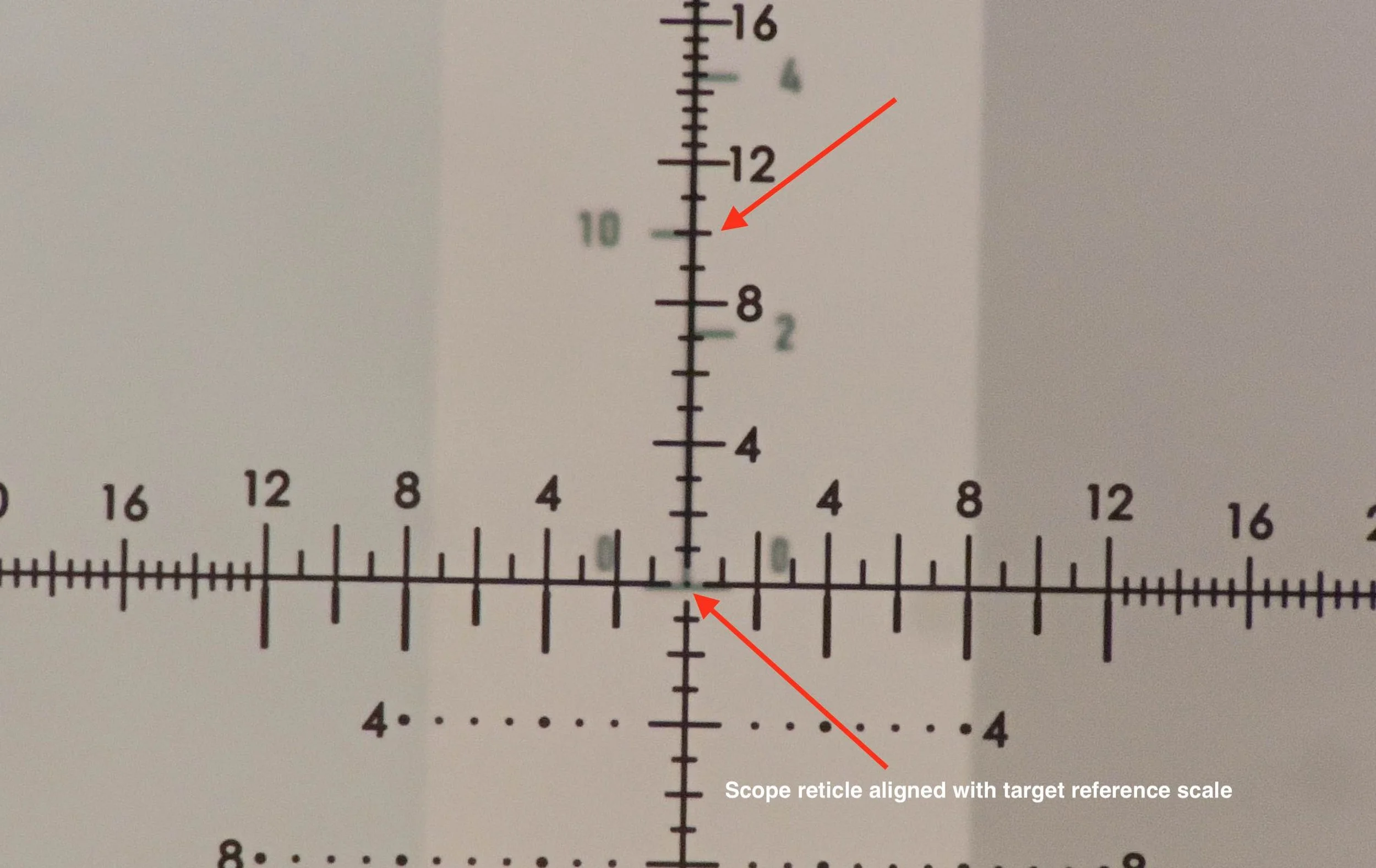
Place your target on a wall or a stable board. A mobile whiteboard or easel works well for flexible setups.
Confirm the distance between your target and your optic. This is important if training with ballistics.
LaserHIT offers target sets designed for fixed distances of 4, 8, and 16 yards.
See BLOGS -> Long Range Training for more details.
Step 2
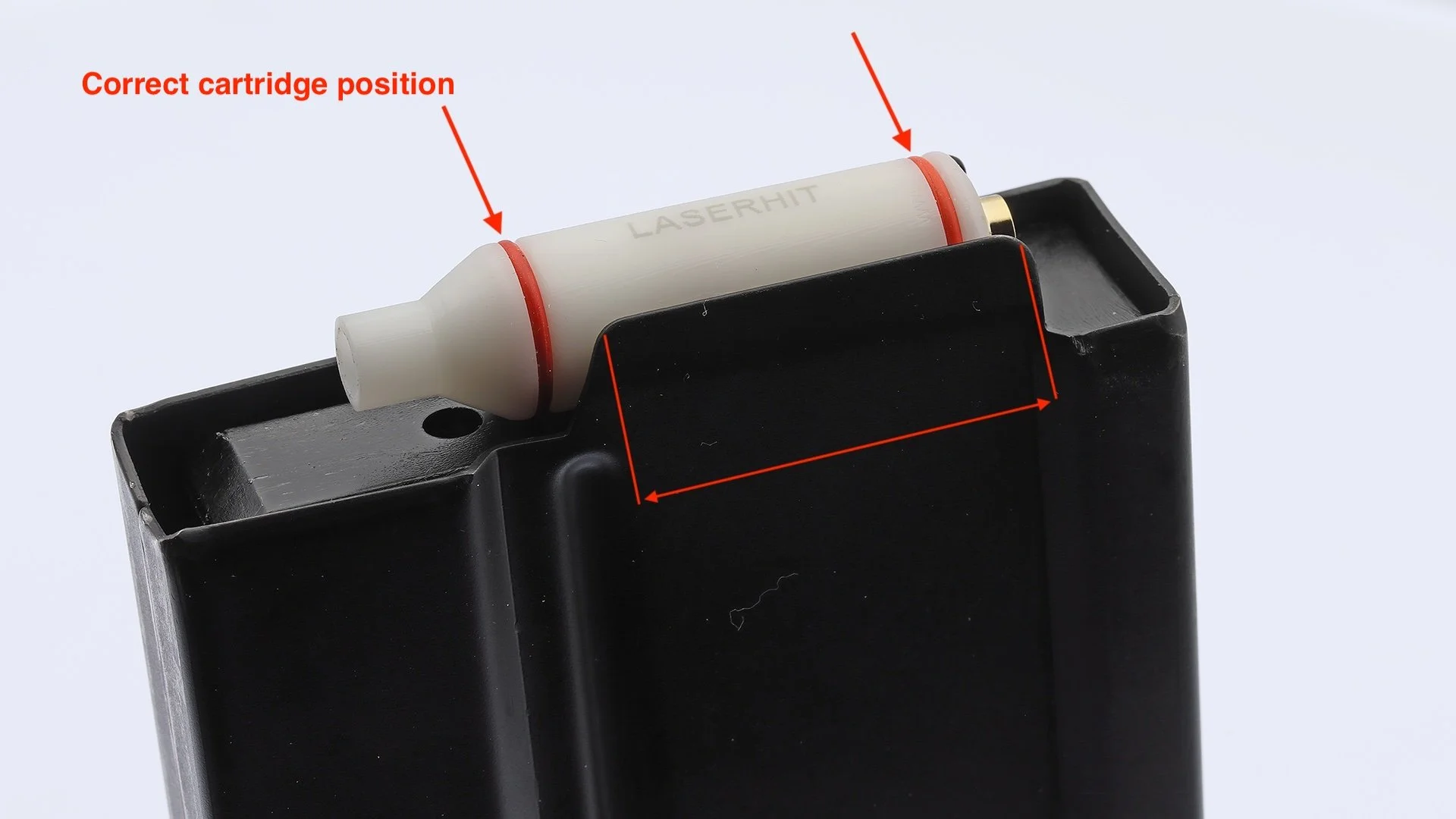
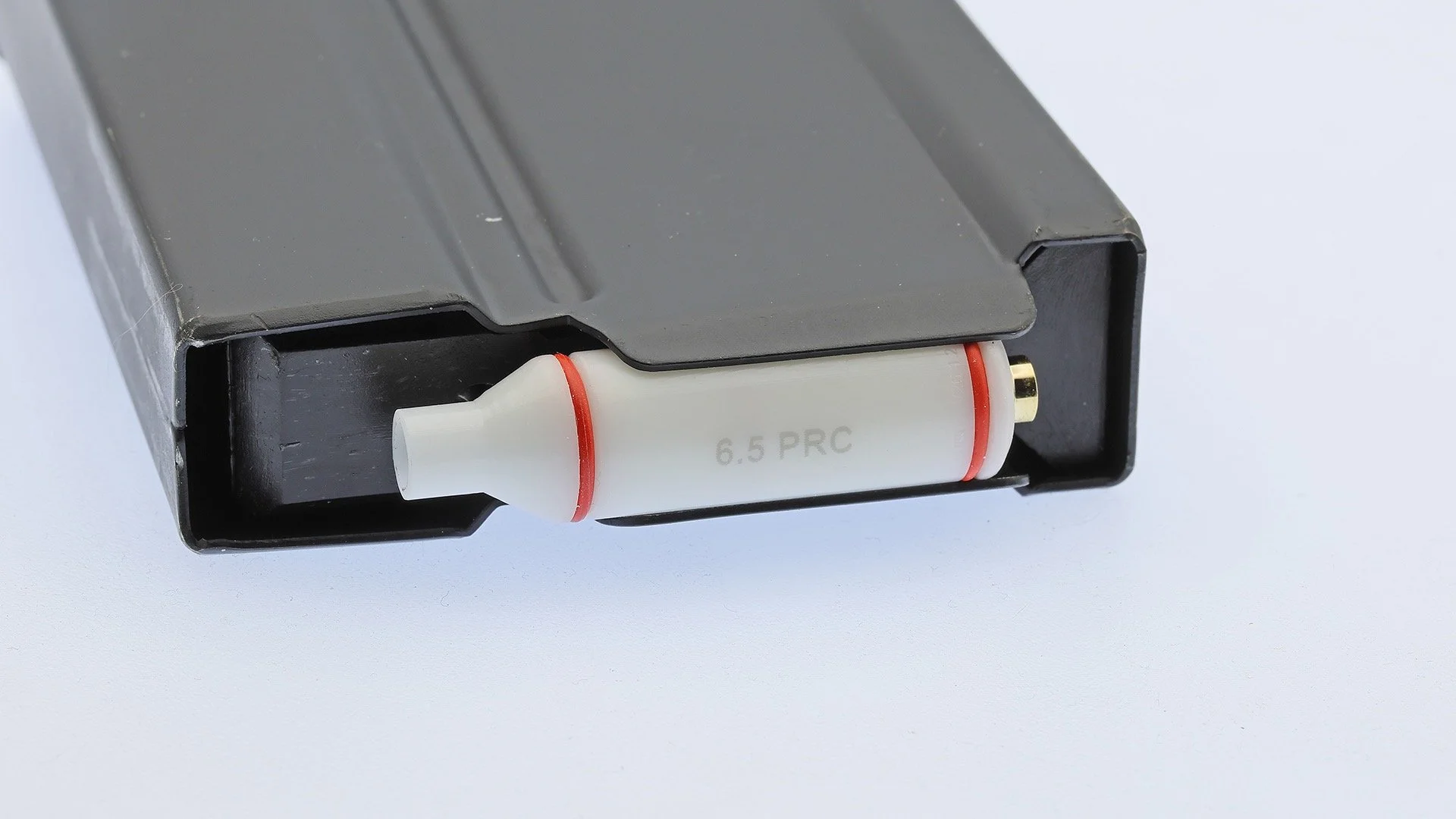
Insert the cartridge into the rifle magazine.
Step 3
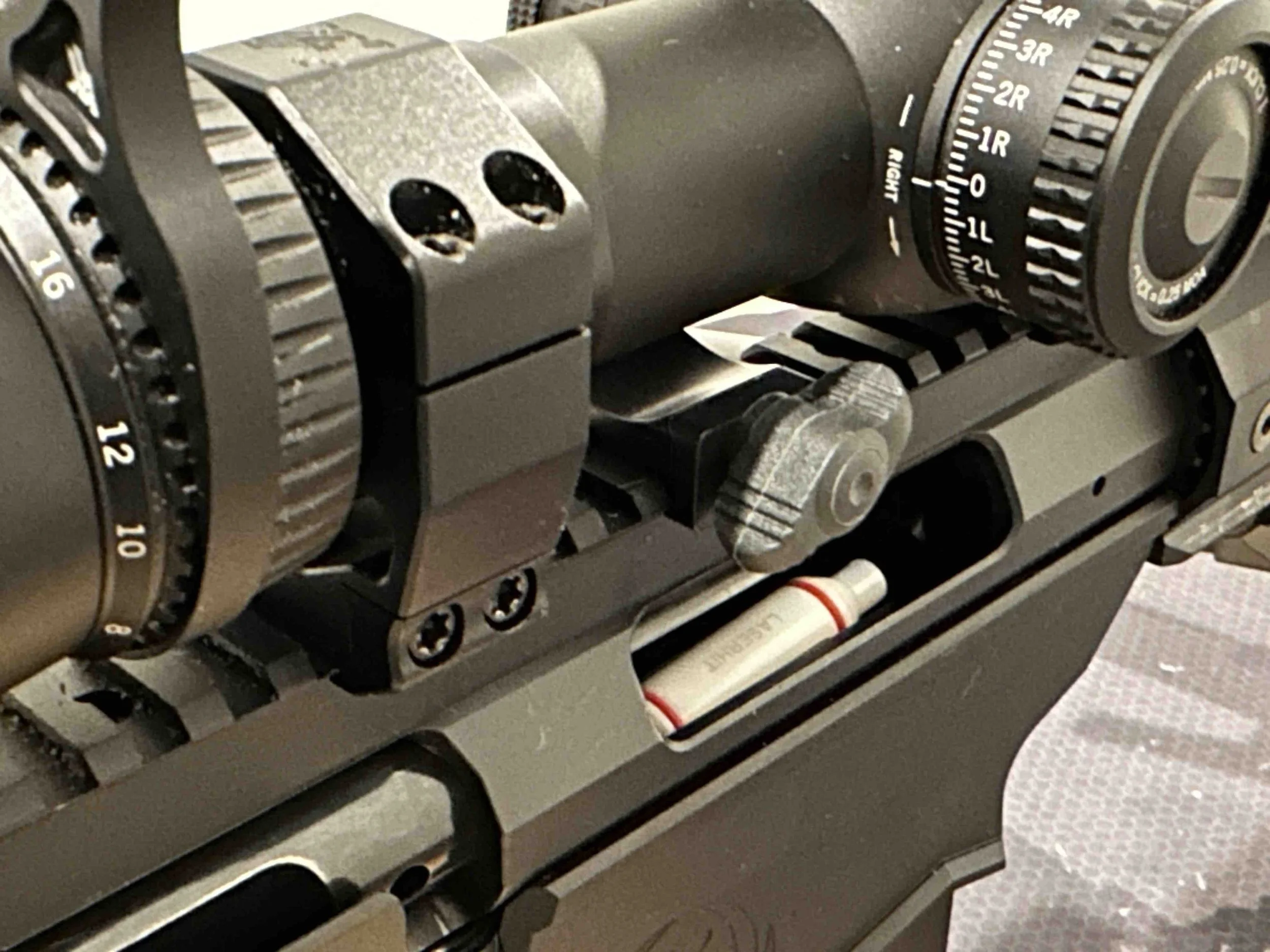
Attach the magazine to the rifle.
Step 4
Confirm cartridge position and chamber it slowly and firmly.
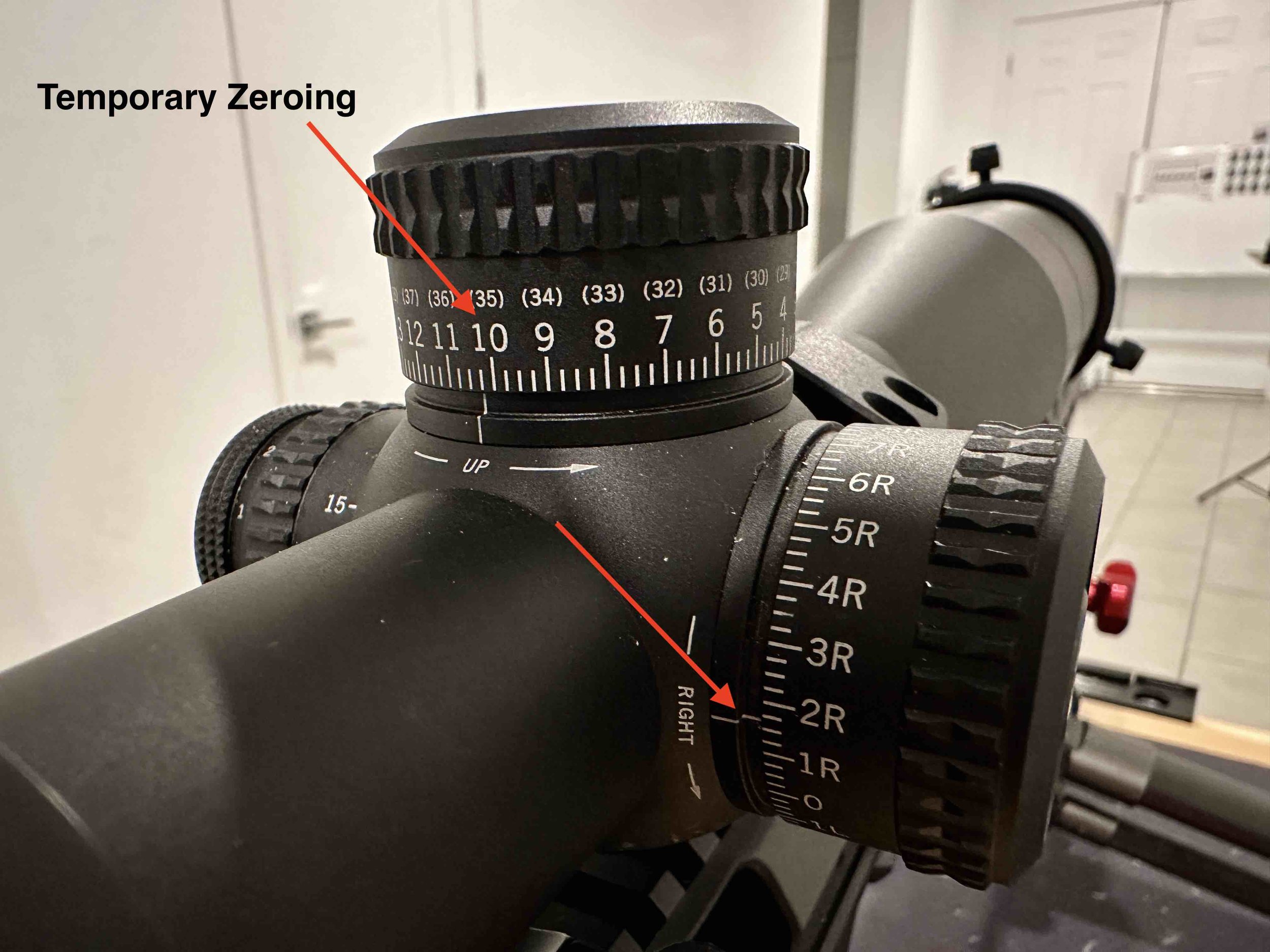
Step 5: Optical Laser Adjustment
Using optic turrets to align the laser with the point of aim, establishing indoor zero for training.
You will perform a temporary indoor zero using your optic turrets for elevation and windage.
This becomes your indoor calibration.
Record these values:
• note turret positions relative to your live-fire zero
• reuse these values during future sessions
All ballistic calculations should be applied relative to this indoor reference.
Why Adjustment Is Required
Each time the cartridge is inserted, small variations may occur:
• cartridge position in the magazine
• chamber tolerances
• firearm-specific geometry
• optic alignment
This is normal.
Adjustment ensures:
• reliable shot placement
• repeatable results
• accurate training feedback
What to Expect
Adjustment is required each time the composite cartridge is inserted.
However:
• the first setup takes the longest
• future setups become fast and routine
This mirrors real-world zeroing:
• multiple rounds are used
• adjustments are refined over time
Indoor training has no cost per shot.
Once calibrated, you can rely on repeatability.
Before You Go
You can use your own targets.
You can train without software if you prefer.
However, starting with a LaserHIT-branded setup is recommended. Not for us, but for you.
It allows you to validate the system, confirm cartridge performance, and build trust in your results.
Once that confidence is established, you can expand into your own targets, setups, and training scenarios.
The LaserHIT app can provide additional measurable data, helping you understand performance, response time, and limits.
We continue to refine the training experience and develop more convenient and simplified solutions for indoor long-range training, with new releases planned later this year.
If you have questions, ideas, or specific requests, reach out or leave a comment. We are ready to talk.